

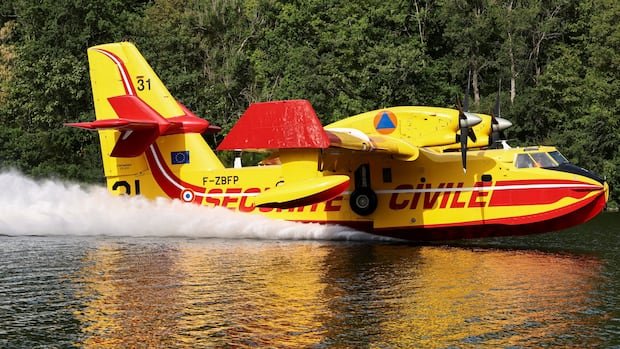

Amid an intense wildfire season in Canada, the United States, and Europe, there is mounting pressure on the manufacturer of Canadair “Super Scooper” water bombers to ramp up production. Calgary-based De Havilland has decided to restart the production of Canadair aircraft after acquiring the water bomber program previously owned by Bombardier up to 2015.
The Canadair amphibious firefighting planes, renowned worldwide for their effectiveness in battling wildfires, are meticulously hand-built in Calgary with components sourced from various locations across Canada. The revival of the production line was announced in 2022, with the first two planes currently in progress and set for completion and delivery by early 2028.
With current shortages and aging fleets, Canadian premiers and European leaders are eager to secure these aircraft. Originally designed in the 1960s for combating extensive fires in the Canadian wilderness, the Canadair stands out for its ability to navigate challenging terrains at low altitudes and swiftly collect water from lakes, rivers, and oceans.
In response to the increasing demand, De Havilland is contemplating the construction of a second production line to meet the market needs. The company, known for its workforce of around 4,000 employees located mainly in Calgary, Ontario, and Victoria, aims to produce approximately 10 water bombers annually at maximum capacity, with plans to double this output with a second line.
The urgency for additional Canadair aircraft has been emphasized by political figures in France, Spain, and Canadian provinces, urging action to address the shortage of operational water bombers. The high demand for these specialized firefighting planes is fueled by the global impact of climate change, driving the need for enhanced firefighting capabilities.
In light of the potential competition that could arise if the demand for water bombers is not met, De Havilland recognizes the critical need to fulfill orders promptly to safeguard Canadian manufacturing jobs. The company’s proactive approach aligns with the Senate’s recommendation to establish a national fleet of modern firefighting aircraft to combat wildfires effectively.
While aircraft play a crucial role in wildfire management by slowing fire spread and supporting ground crews, it is essential to acknowledge that they are just one component of a comprehensive firefighting strategy. Groundwork, prevention, and mitigation efforts are equally vital in addressing the escalating threat posed by wildfires. The commitment of the federal government to bolstering national capacity to respond to wildfires is underscored by ongoing collaboration with provincial and territorial counterparts to enhance emergency response measures.