

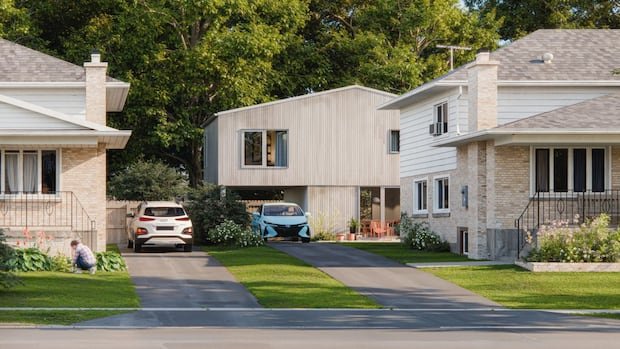

The Northern Ontario Home Builders’ Association suggests that while the City of Greater Sudbury’s adoption of the new federal Housing Design Catalogue may benefit smaller homebuilders and homeowners, larger and more established homebuilders are less likely to see significant advantages. Developed by the Canada Mortgage and Housing Corporation (CMHC), the catalogue offers a range of pre-approved housing designs available for free use by any homebuilder. With nearly 30 municipalities across Canada already accepting these designs, Greater Sudbury recently joined the program on August 10.
Melissa Riou, the city’s director of planning services, highlighted that Greater Sudbury now permits two accessory dwelling unit designs and two fourplex designs from the catalogue. According to Riou, this move can expedite the approval process for applicants and homeowners by streamlining the design phase, allowing them to utilize or adapt the pre-approved plans. However, applicants opting for these designs will still need to engage a professional to customize the plans to suit their property, including adjustments for grading and foundation drawings.
Morgan Rouleau, CEO of the Northern Ontario Home Builders’ Association, explained that established homebuilders often have their own established designs and may find less benefit from the Housing Design Catalogue. Rouleau emphasized the importance of municipalities allowing builders to maintain a registry of repeat plans to avoid resubmitting designs for full review each time. While the catalogue may be more advantageous for smaller companies lacking proven designs, it could also appeal to homeowners interested in incorporating the available accessory dwelling unit designs into their properties.
Rouleau noted that Sudbury has numerous suitable lots for secondary suites, making gentle density options like these designs an integral part of discussions on expanding housing supply without extensive new subdivisions. However, the demand for fourplexes is more site-specific, influenced by land costs and zoning compatibility in specific neighborhoods. Rouleau expressed her members’ desire for improvements in how deficiencies are addressed in housing applications submitted to the city, advocating for more consistency in documentation requirements and enhanced visibility into the application review process.
Additionally, the association will monitor the city’s new implementation of artificial intelligence to aid in reviewing building permit applications for minor errors. Rouleau believes that a quicker and more uniform review process would accelerate development efforts across the board.