

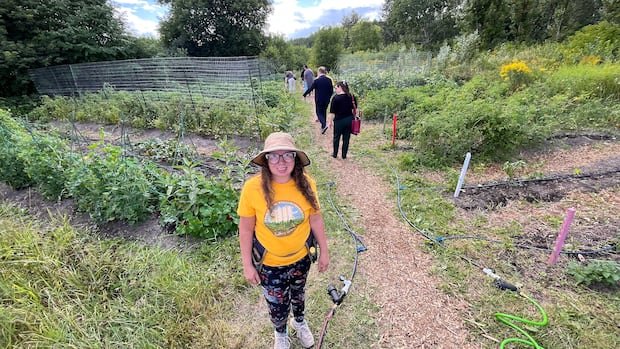

A community initiative that emerged from the collaboration of volunteers and locals has blossomed into a hub for fresh produce, job opportunities, and growth in the Flour Mill neighborhood of Greater Sudbury. The Flour Mill Community Farm recently celebrated its 10th year of operation, marking a decade of progress at its location in Ryan Heights.
Destiny Roy, the farm’s program coordinator, expressed pride in reaching this significant milestone. She highlighted the farm’s humble beginnings as a mere idea among community members, volunteers, and citizens, which materialized with support from nonprofits, the city, and other sponsors.
Roy, who initially volunteered at the farm when it was smaller and heavily reliant on volunteers and student interns, emphasized the evolution of the farm. Presently, the farm provides summer employment opportunities for local high school students, offering them valuable work experience and community involvement.
Noteworthy developments at the farm include the installation of new trellises for vertical gardening and a drip irrigation system to enhance water efficiency. These enhancements have led to increased food production, with approximately 900 kilograms of vegetables harvested annually and distributed within the neighborhood.
Situated in an area with affordable housing, the farm emphasizes affordability as a core mission. Through its pay-what-you-can market, residents can access fresh vegetables at a price of their choosing. Additionally, nearby schools engage in planting activities at the start of each growing season, and volunteers receive produce in exchange for their assistance.
Richard Picard, chair of the Greater Sudbury Development Corporation, disclosed a $46,000 donation to support the farm’s expansion and employment of 10 seasonal staff. He highlighted the farm’s entrepreneurial aspect, fostering skills in marketing and sales among participants.
Ward Coun. Mike Parent echoed the sentiment of investing in youth and their futures through the farm. He emphasized the educational value for students who witness their efforts culminate in tangible outcomes, such as growing food and bringing it to market.
Despite its successes, the farm has faced challenges, including difficulties in securing funding for student employment due to changes in summer programs and instances of vandalism. However, community backing and sponsorships from local businesses have sustained the project.
Looking forward, Roy aspires to hire more students and introduce new programs like canning, cooking, and intergenerational activities. The ultimate goal for the farm’s 10th season is to distribute as much produce as possible to the community and ensure student satisfaction with their work.
Picard expressed hopes for the farm’s continued success, wishing for another 20 years of impactful service to the Greater Sudbury community.