

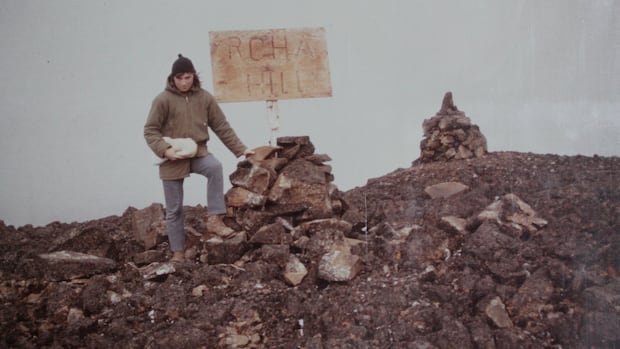

In 1974, 19-year-old Doug Munson was interviewed by the federal government for a job in the High Arctic without a clear understanding of the location. He accepted the opportunity and journeyed from southern Ontario to the Isachsen High Arctic weather station near the North Pole. The station, operational from 1948 to 1978, is now abandoned and classified as a contaminated site.
The federal government is preparing to clean up the former Cold War era station due to hazardous substances like asbestos, lead, mercury, and mold found on the premises. The Department of Environment and Climate Change Canada (ECCC) has identified the site as an environmental risk in documents submitted to the Nunavut Impact Review Board (NIRB).
Munson, reflecting on his experience at Isachsen in the 1970s, shared how the station’s work impacted his personal and family life. He recalled the unique orange-painted buildings used for easy identification by landing planes in the tundra.
During his tenure at the station, Munson and his team of meteorologists spent long hours tracking weather data, including temperature, humidity, and winds. In their leisure time, they engaged in recreational activities like hiking, listening to hockey games on CBC Radio, and playing hockey with makeshift equipment.
Munson’s time at Isachsen was challenging, as evident from a single diary entry made during the dark winter months. His son, aAron Munson, discovered the diary 40 years later and was moved by his father’s feelings of isolation and loneliness documented in it.
aAron, inspired by his father’s experience, visited Isachsen station in 2016 to capture its remnants through photography. He described the abandoned site as eerie, filled with old fuel drums, snow-covered lounge chairs, and remnants of the past, including kitchen dishes left untouched.
Reflecting on the memories held by the station, aAron called it a “ghost station” that encapsulated the experiences of those who had been there. He pondered his father’s presence in the same location years ago and marveled at the connection.
After his visit, aAron created a collection named Isachsen from the photos he took, preserving the essence of the station. Despite the challenges faced during his time at Isachsen, Doug Munson expressed sadness over the impending disappearance of the site, emphasizing the value of memories and photographs.
Tag: rewrite-pending