

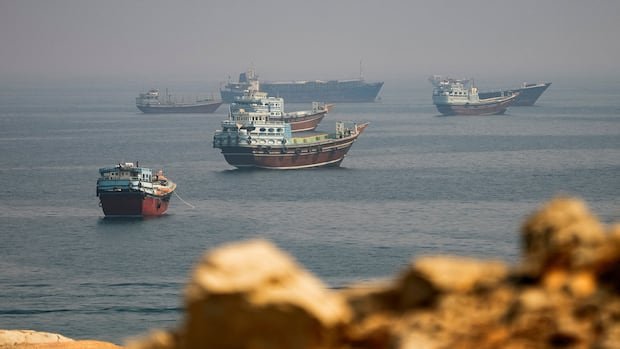

The United States conducted fresh airstrikes on Iranian targets on Tuesday, posing a risk of escalating the ongoing conflict that has impacted global energy prices and President Donald Trump’s domestic approval ratings. These strikes were a response to an exchange of fire over the weekend, the first such incident since July, and were carried out following an attack on two tankers leaving the Strait of Hormuz, a critical global oil shipping route that Iran has effectively closed off. As a result, global oil prices surged by over $4 per barrel, reaching a five-week high.
In retaliation, Tehran targeted U.S. assets in Jordan, Bahrain, and Iraq, displaying defiance despite warnings from President Trump regarding a potential strong response and imminent sanctions from U.S. Treasury Secretary Scott Bessent. Tragically, five individuals lost their lives and 50 were injured during an attack at a wedding near Sirik, a coastal region adjacent to the Strait of Hormuz, with a four-year-old child among the deceased.
The U.S. did not immediately respond to these developments. The Iranian Revolutionary Guard Corps (IRGC) stated that the U.S. strikes would further restrict access to the Strait of Hormuz, through which a significant portion of the world’s oil was transported before the conflict. Iranian officials emphasized their determination to prevent oil exports from the Gulf, echoing similar sentiments expressed by the Iranian parliament speaker.
Following a period of relative calm, the renewed hostilities disrupted the fragile peace, with President Trump justifying the airstrikes as retaliation for Iranian activities in the Strait of Hormuz and attacks on U.S. military installations. The situation escalated as Iran targeted U.S. bases in various locations, claiming casualties among U.S. forces. The conflict extended to Jordan, Bahrain, and Iraq, with reports of missile and drone attacks on U.S. assets.
President Trump hinted at the unlikelihood of another ceasefire, criticizing previous agreements with Iran and emphasizing potential consequences for further aggression. The U.S. Embassy in Qatar issued warnings to Americans in the Middle East to remain vigilant due to possible disruptions in travel and airspace closures.
Efforts to de-escalate the situation and reopen the Strait of Hormuz, a vital energy transit point, have been hindered by blockades imposed by both Iran and the U.S. Mediation attempts by regional countries have yet to yield a resolution. Additionally, the U.S. announced plans for imposing sanctions on Iranian entities to intensify economic pressure on the country.
Iran’s Foreign Ministry criticized the U.S. for its negotiating tactics, accusing Washington of making unreasonable demands. The conflict has severely impacted energy exports from the Gulf, with both Iran and the U.S. striving to assert control over the strategic waterway. Despite economic challenges, Iran’s central bank governor affirmed the country’s sufficient foreign currency reserves.