

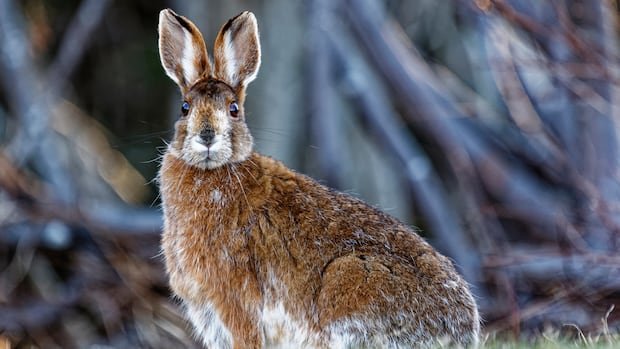

After post-tropical storm Fiona, Prince Edward Island has witnessed an apparent rise in snowshoe hare sightings, as confirmed by a provincial wildlife biologist, Garry Gregory. Many Islanders have reported seeing more “rabbits” in their yards, which, in reality, are likely snowshoe hares rather than rabbits, as rabbits are not native to the province.
While there is no official tracking data to support an increase in the snowshoe hare population, Gregory believes that changes in the landscape post-Fiona make it reasonable to suspect a surge in hare numbers. The storm left dense debris in forests and woodlots across the island, creating ideal escape cover for hares with brush piles, downed trees, and thick patches of deadfall.
The increased hiding spots have led to higher hare survival rates, potentially resulting in a population boost. However, Gregory predicts that as the debris breaks down and coniferous trees shed their needles over time, the advantage hares gained post-storm will diminish gradually.
The storm’s impact also opened up the forest canopy to sunlight, promoting the growth of early successional plants that hares rely on for winter food. Species like willows, grey birch, maples, and pin cherry offer prime forage for snowshoe hares during the winter months.
Although the new habitat benefits various wildlife, Gregory highlighted that certain stands, like white spruce, may take decades to return to their pre-Fiona appearance. He also noted that while more hares may be present, it doesn’t necessarily translate to an increase in predators on the island, as P.E.I.’s predators are generalists who consume a variety of prey.
For Islanders encountering hares in their yards, Gregory advised against feeding them, as hares primarily feed on grass and herbaceous plants in summer and are naturally wary of human intervention. Feeding hares could also attract them closer to dogs, leading to potential harm.
In response to reports of hares with ticks, Gregory clarified that the tick species commonly found on hares, known as “rabbit ticks,” pose no significant threat of Lyme disease and are specific to wild hares and rabbits. Observing ticks on hares is normal and usually does not impact their health unless the infestation is severe.