

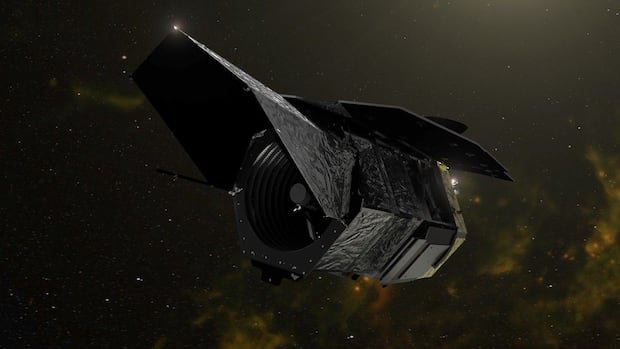

At 7:26 a.m. on Sunday morning, a new space telescope is scheduled to launch from Cape Canaveral, Florida, atop a Falcon Heavy rocket. The Nancy Grace Roman Space Telescope, named after NASA’s first chief astronomer, is set to embark on a mission to explore the mysteries of our universe from a location 1.5 million kilometers away known as L2, where gravitational forces allow satellites to maintain a stable orbit. This five-year mission, with the potential for extension, aims to provide groundbreaking insights into the cosmos.
The Nancy Grace Roman Space Telescope distinguishes itself from existing telescopes such as the Hubble Space Telescope and the James Webb Space Telescope through its unique set of instruments. With a 2.4-meter mirror similar to Hubble’s, it also features a coronagraph capable of blocking starlight to detect planets orbiting distant stars. Moreover, its Wide Field Instrument, as sensitive as Hubble’s but with a capacity to image a region 100 times larger, will revolutionize sky and stellar surveys, enabling the resolution of billions of stars.
The telescope’s capabilities are fueling anticipation for significant discoveries in various astronomical domains. Among the key areas of exploration is the search for exoplanets, as astronomers strive to uncover the factors that make our solar system distinctive or potentially common in the universe. Leveraging methods like the transit technique, which involves monitoring stars for planetary transits, the Nancy Grace Roman Space Telescope is poised to significantly expand the search for exoplanets, aiming to observe around 100,000 transiting exoplanets across a vast array of stars.
In addition to exploring exoplanets, the telescope will delve into the enigmatic realms of dark matter and dark energy, crucial components that constitute the majority of the universe’s composition. With a focus on detecting dark matter within galaxies and globular clusters, the mission will provide insights into the distribution of both dark and normal matter in hundreds of millions of galaxies. By shedding light on the nature of dark energy, which propels the universe’s expansion, the telescope promises to deepen our understanding of cosmological phenomena and the fundamental forces shaping the universe.
The launch of the Nancy Grace Roman Space Telescope heralds a new chapter in space exploration, offering a platform for groundbreaking discoveries that could reshape our understanding of the universe and our place within it.