

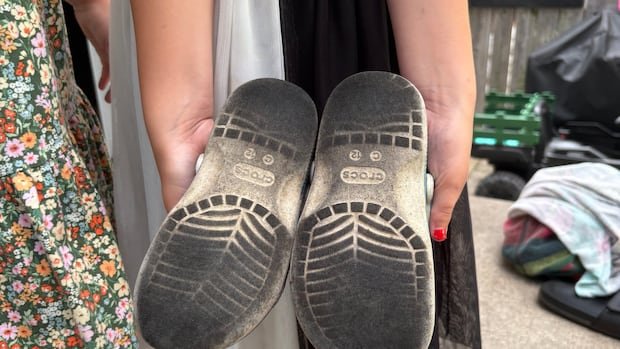

Hamilton Public Health has stated that the recent black soot fallout in parts of Hamilton in early July does not pose any long-term health risks to the public. Residents have been complaining for years about a black substance that intermittently covers properties and sticks to pets’ paws. The issue resurfaced in July, with some residents noting a particularly severe occurrence.
The Ontario Ministry of the Environment, Conservation and Parks (MECP) attributed the soot deposition on Hamilton neighborhoods last month to emissions from manufacturer Birla Carbon. Public Health conducted an assessment of the potential health impacts of the black particulate matter that fell predominantly within wards 2, 3, 4, and 6 in early July.
After examining available data, including the MECP’s analysis of the fallout material, and considering the short duration of the July fallout, Public Health dismissed the possibility of long-term health risks. While some individuals reported mild symptoms like itchy eyes, cough, or sore throat, there was no notable increase in visits to the emergency department for severe symptoms, as per Hamilton Public Health’s review of local hospital data.
Dr. Elizabeth Richardson, the medical officer of health, emphasized that the health and safety of residents remain a top priority. She clarified that the emissions in early July represented a temporary exacerbation of ongoing environmental challenges faced by Hamiltonians and are not expected to result in long-term health hazards by themselves. However, the incident contributes to the existing air quality issues, particularly impacting the north end of Hamilton.
Public Health’s evaluation involved analyzing air quality and weather data, acute health effects, and environmental samples, in addition to consulting with toxicology experts and Public Health Ontario. The province’s environmental samples primarily contained carbon, with trace amounts of sulphur and mineral particles. Although these materials can be harmful at high concentrations over extended periods, Public Health believes that the exposure levels during the early July event were low.
A recent study by McMaster University detected toxic chemicals consistent with coal combustion in samples collected in Hamilton. Researchers collected samples in 2024 and 2025 across the city, revealing higher levels of dust and polycyclic aromatic hydrocarbons near the industrial zone in northeast Hamilton.