

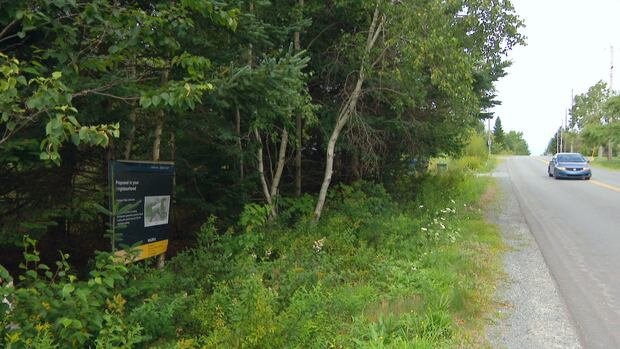

Halifax city councilors have rejected a housing development proposal in a historic Black community following concerns raised by residents about the project’s size and the presence of unmarked graves in the vicinity.
The developer of the Links at Montague golf course sought approval to construct a six-story shared housing facility with special care services for seniors on Montague Road in Lake Loon. The proposed building would comprise 125 housing units adjacent to the existing driving range, with the developer committing to funding a new sidewalk to link the development to the nearest transit stop.
During a public hearing on the project before the Harbour East-Marine Drive community council last Thursday, several residents expressed apprehensions regarding the development’s scale, citing traffic congestion on the busy road, potential impacts of blasting on nearby wells, and longstanding community knowledge about unmarked graves extending onto the development site.
Crystal Mulder, a resident living near the site, emphasized the lack of respect for ancestral remains in the area, highlighting a broader issue affecting Halifax and Nova Scotia. Mulder, who comes from a long-standing African Nova Scotian heritage, recounted childhood memories of being cautioned about playing near rock formations believed to mark graves.
Despite a city staff report indicating that a provincial official had visited the site and concluded that there were likely no graves within the development boundaries, Mulder insisted that a comprehensive archaeological study should have been conducted. The province did require an archaeological monitor to oversee driveway construction, with work mandated to halt immediately if any human remains were discovered.
Jess Harper, the municipal planner handling the project, disclosed that the provincial coordinator had recommended an archaeological resource impact assessment, which the developer had not completed, though Halifax lacked the authority to enforce this requirement.
Mulder argued against the necessity of the project, pointing out the ongoing construction of seniors’ housing a few kilometers away in partnership with Northwood and Akoma Holdings. Residents at the hearing criticized the level of local engagement, deeming an April 2024 public meeting insufficient and urging better community involvement by the developer.
While Halifax staff deemed the proposal compliant with city planning regulations and recommended its advancement through a development agreement, the majority of the community council voted against the project, with only Councilor David Hendsbee in support. Councilor Becky Kent expressed concerns about traffic implications, the project’s scale, and the significant archaeological value of the site.
Councilor Sam Austin echoed these sentiments, underscoring the council’s responsibility to Lake Loon residents and acknowledging the historical marginalization of African Nova Scotian communities in planning decisions by local municipal bodies.
Lake Loon and Cherry Brook, its neighboring community, are in the initial phases of collaborating with the city’s African Nova Scotia Community Action Planning (ANSCAP) team to formulate a community action plan and potentially a new planning strategy akin to those in Upper Hammonds Plains and Beechville.
Anthony Riley, president of the Lake Loon-Cherry Brook Community Development Association, stressed the importance of community planning for long-term sustainability. The developer retains the option to appeal the council’s decision to the Nova Scotia Regulatory and Appeals Board.
Riley, who opposed the project at the hearing, expressed relief at the council’s decision but anticipated a potential appeal, characterizing the issue as an ongoing struggle. Despite reaching out to the developer’s consultant for comment, CBC did not receive a response.