

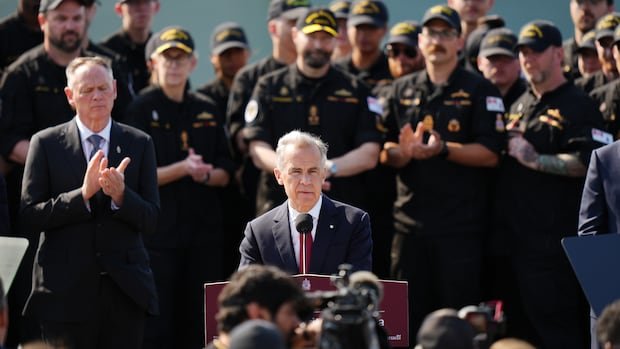

Prime Minister Mark Carney revealed that Canada is in talks to purchase a potential twelve submarines from ThyssenKrupp Marine Systems (TKMS), a German shipbuilder. This decision concludes a fierce competition to replace Canada’s aging Victoria-Class fleet, with bids from South Korea’s Hanwha Ocean and the joint bid from Germany and Norway through TKMS.
While specific details of the negotiations remain confidential, Carney highlighted five key points from what he termed “the most significant defense procurement in Canadian history.” TKMS proposed delivering four Type 212CD submarines to the Royal Canadian Navy by 2036, with the first expected by 2034, aligning closely with South Korea’s offer to deliver four submarines by 2035. This timing is crucial as Canada’s current fleet is slated for retirement in the mid-2030s, with only one operational submarine currently in service.
Carney emphasized that the selection of the TKMS bid signals Canada’s intent to acquire up to a dozen submarines, with a requirement that the investment must generate economic benefits equal to the government’s outlay. The deal is projected to inject “tens of billions of dollars in investment” into Canada’s economy, creating over 100,000 high-paying jobs across various sectors such as space, munitions, autonomous technology, critical minerals, and research and development.
The TKMS contract aligns with Canada’s economic objectives, including the goal to boost LNG production to 50 million tonnes annually by 2030. The German bid includes several proposed investments, such as establishing a maintenance facility, manufacturing centers for torpedoes and anti-torpedo systems, and converting Manitoba’s Port of Churchill into a major export hub for Canadian LNG and critical minerals.
One significant aspect of the TKMS bid is its compatibility with NATO forces, as TKMS is an existing supplier for the alliance and is developing submarines for Germany and Norway. Carney emphasized the platform’s Arctic optimization and full NATO interoperability, allowing seamless communication and joint missions.
Carney clarified that while the German bid aligns with Canada’s Indo-Pacific strategy, Hanwha remains the backup supplier should negotiations with TKMS falter. The announcement was made in Nova Scotia, with Carney noting the potential for substantial economic activity in Halifax and on the West Coast due to the submarine contract, with benefits extending throughout Canada.