

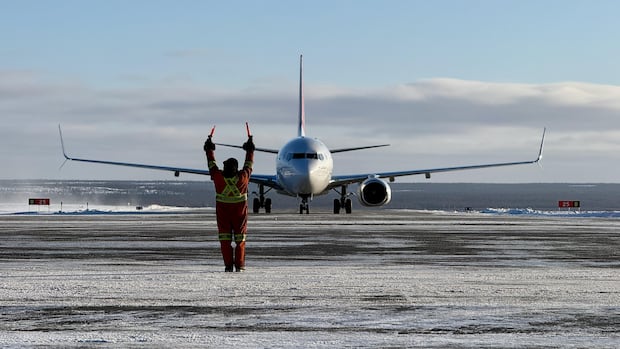

A minimum of 18 airlines are urging the federal government to increase the maximum flight duty period for pilots by one hour daily, arguing that existing regulations hinder their ability to cope with the frequent delays affecting air travel in the Northern regions.
This appeal is met with strong resistance from the leading pilot union in the country, which claims that such changes could result in additional exemptions and exacerbate pilot fatigue to unsafe levels.
Under the proposed changes, the maximum daily flight duty period—the time from when a pilot arrives at work until the last engine shuts down—would rise from 13 to 14 hours, while the weekly cap would increase from 60 to 70 hours, as detailed in exemption requests submitted to Transport Canada earlier this year.
In total, pilots could be permitted to work up to 210 hours in a 28-day span, an increase from the current allowance of 192 hours.

A cockpit view of an Air Inuit B-737 in northern Quebec. (Jonah Schantz/Air Inuit)
These airlines are primarily focused on serving the most isolated areas of the nation. They assert that regulations established since 2020 do not accommodate the erratic weather conditions and inadequately funded airport infrastructures in the North.
They are advocating for these modifications to be incorporated into the draft regulations currently being developed by Transport Canada, aimed at granting more flexibility to air carriers.
“It was a one-size-fits-all approach, which is not feasible,” stated Bernard Gervais, executive director of the Northern Air Transportation Association.
“What we are requesting is for regulations to be tailored according to the operator’s scale and the operations they conduct.”
Experts in sleep research indicate that high levels of fatigue can be equated to impairment due to alcohol, a particularly serious concern for those piloting aircraft.
Fatigue can manifest in various ways, including lapses in short-term memory, delayed reaction times, and diminished capability to prioritize tasks or assess risks.
The core of the debate between airlines and pilots revolves around the maximum number of work hours deemed safe.

Tim Perry, president of ALPA Canada, the main pilots’ union, warns that extended pilot hours pose significant risks. (Justin Tang/The Canadian Press)
“You must listen to us when we express that what is being considered could be very dangerous,” remarked Tim Perry, president of ALPA Canada, representing over 10,000 pilots in the country.
“This appears, from a professional standpoint, to be driven by profit motives.”
Canadian regulations are intricate and differ based on numerous factors, including departure and arrival times, the number of flight segments, and the amount of days off spent at home.
A fatigue risk-management system is already in place to allow airlines some flexibility, but implementing it can be complex and expensive, particularly for smaller carriers.
ALPA Canada includes pilots from some of the airlines seeking exemptions, while other regional operations do not have union representation.
“If one airline receives an exemption, it may be perceived as a competitive advantage,” Perry stated. “This could lead to a cascade of further exemptions, making it hard to establish a clear boundary.”
The National Airlines Council of Canada, which includes major carriers such as Air Canada, WestJet, Air Transat, and Jazz, has chosen not to comment on the proposed changes.
When Canada implemented stricter regulations in 2020 to control pilots’ schedules and align the nation’s rules with international standards, many carriers voiced their objections from the beginning.
They contended that these regulations compelled them to hire additional pilots and hampered their ability to respond to unpredictable situations like fog, flat tires, or runway closures.
“For remote communities, if delays lead to flight cancellations, the repercussions are substantial,” said Joe Sparling, president of Air North, based in Yukon.
“If a passenger requires medical travel for an appointment and the flight is delayed by a day, that appointment must be rescheduled.”
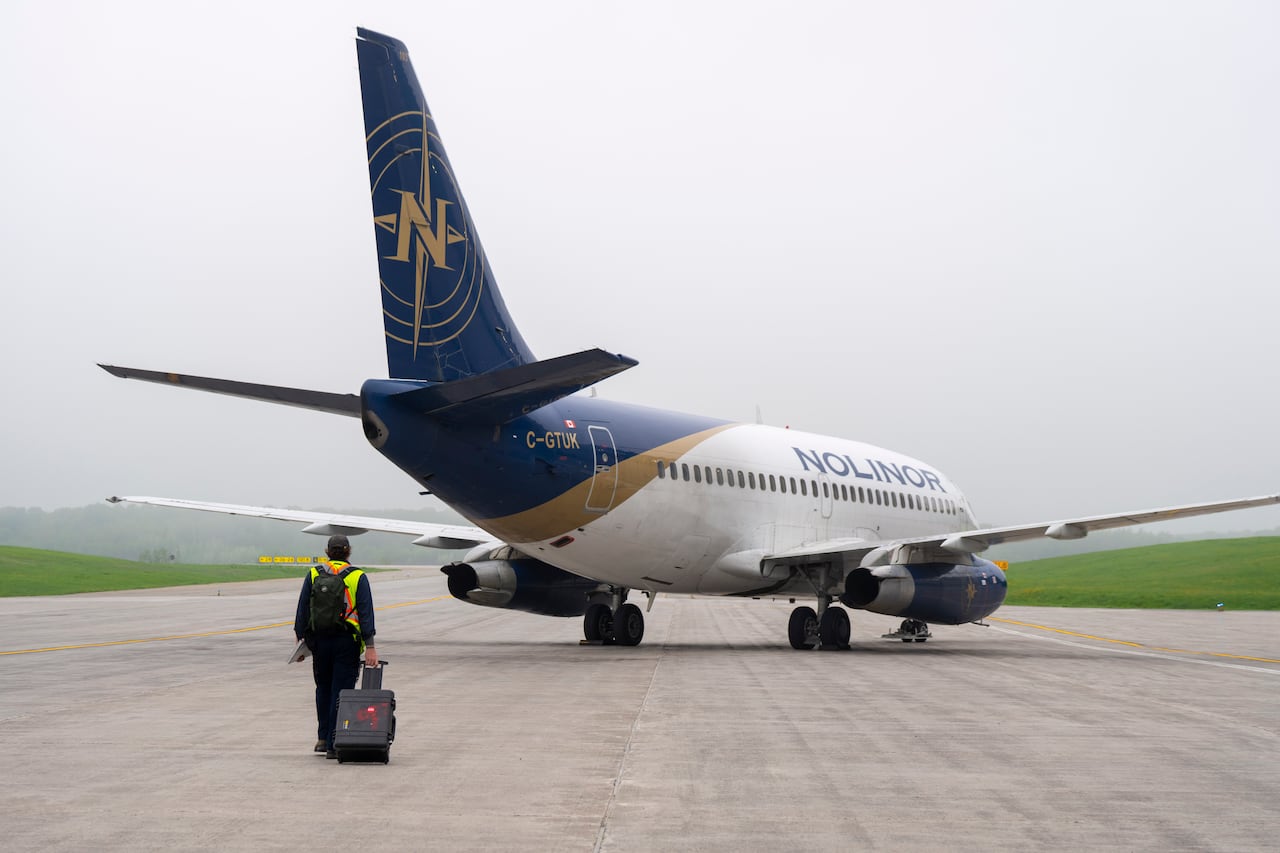
A mechanic approaches a Nolinor Aviation aircraft in Mirabel, Que., last year. The airline asserts that the conditions of flying in the North necessitate different regulations. (Christinne Muschi/The Canadian Press)
Nolinor, which is focused on charter flights, claims it must position pilots in Val d’Or, Que., to ensure that delays in the North do not prevent the regular crew from returning south.
“The regulations were not created to reflect the realities of the Arctic,” explained Yves Bergeron, Nolinor’s vice-president of operations. “The situation in Montreal is vastly different from that in Iqaluit.”
According to several sources involved, Transport Canada’s proposed regulations are currently stalled, and future developments hinge on federal Transport Minister Steven MacKinnon.
“It’s heavily influenced by politics. The minister will have the final say,” remarked Gervais from the Northern carriers’ industry association.
The pilots’ union is urging the minister to reject the proposed changes to the maximum flight duty hours.
MacKinnon’s office indicated that Transport Canada officials are still reviewing the situation.
“Ensuring the safety of civil aviation operations remains the department’s utmost priority, and it is committed to maintaining strict and effective oversight across the entire system,” said spokesperson Philippe-Alexandre Langlois.
Fatigue already a risk: experts
Matthew van Wollen, a Canadian expert in fatigue who works at Pulsar Informatics in the U.S., argues that there are safe methods to extend Canadian pilots’ shifts with “simpler and more tailored operating profiles.”
He has collaborated with Transport Canada and various Canadian airlines, but asserts that his views are grounded in scientific research.
He identified three elements that contribute to fatigue: whether work hours extend into late-night hours, total shift length, and any accumulated sleep deficit.
With fuel prices more than doubling since the war in the Middle East began, one of the main places Canadians may feel the war’s impact is air travel. The head of the International Energy Agency says Europe has ‘maybe six weeks or so [of] jet fuel left.’ CBC’s Ashley Fraser speaks to travel experts about what to expect over the next few months.
Van Wollen suggested that many pilots might prefer to work longer hours for several days, allowing them to enjoy more days off afterward.
He emphasized that carriers should focus on managing fatigue risk on a daily basis.
“Following the rules does not guarantee safety. It does not eliminate fatigue,” he cautioned.
Another sleep expert, Clinton Marquardt, expressed that it would be beneficial to establish parameters for each airline in collaboration with their pilots.
“That is the only way to resolve this satisfactorily,” noted Marquardt, a former official with the Transportation Safety Board.
While he acknowledged the importance of “operational needs and workforce desires,” he stated that they should not be the “foundation of the system.”
He asserted that scientific data must guide the formulation of appropriate regulations.
Airlines maintain that pilots can always opt to cancel a flight if they feel too fatigued. They also express their willingness to assess the effects of any alterations to pilot schedules and adjust as necessary.
“We are not aiming to schedule 14-hour days on a regular basis,” said Jonathan Lukca, an operations manager at Air Inuit.
“When the limit is reached, safety could be compromised, leading pilots to leave for other opportunities. That is not beneficial for anyone.”