


Much has evolved in New Brunswick over the past 12 years since the shale gas exploration moratorium was enacted.
However, one constant remains: the resources beneath our feet.
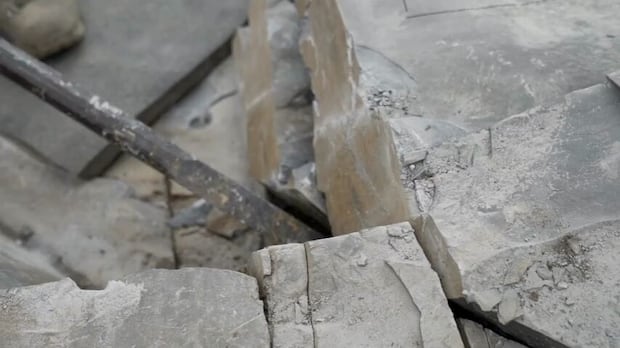
It is established that shale gas is contained within the rock underneath the ground.
The New Brunswick government approximates that the province holds 77 trillion cubic feet of shale gas across two identified gas fields. In contrast, Alberta, a significantly larger province, boasts 3,455 trillion cubic feet.
In the southern region of New Brunswick, the McCully Field near Sussex is estimated to contain 67.3 trillion cubic feet of gas, while the Stoney Creek Field near Hillsborough to the northeast holds an additional 10.9 trillion cubic feet.
What led to its formation?
Shale, the rock type that may harbor gas, is prevalent throughout a considerable part of the province, stretching from Bathurst to Fredericton and then eastward to Sackville.
To comprehend how gas became trapped in the shale, we must look back 350 million years to the Carboniferous period, a time when New Brunswick was drastically different.
“During that period, southern New Brunswick was characterized by an extensive marine environment,” explained Denis Lavoie, a retired geologist who spent 30 years at Natural Resources Canada.

Not all shale rock contains gas, and geologist Denis Lavoie noted that the shale in New Brunswick that may hold gas is located in the southeast. (CBC)
Lavoie mentioned that this vast ocean was filled with tiny organisms.
Upon their death, these organisms settled at the ocean floor, eventually forming a layer that became buried beneath hundreds of meters of rock over millions of years.
“The organic matter is then converted [into] hydrocarbons due to the increased temperature,” Lavoie stated.
In New Brunswick’s situation, the desired hydrocarbon would be natural gas.
What is the estimated volume?
Knowing shale gas is present in the shale raises the question: how much shale gas is actually contained within it?
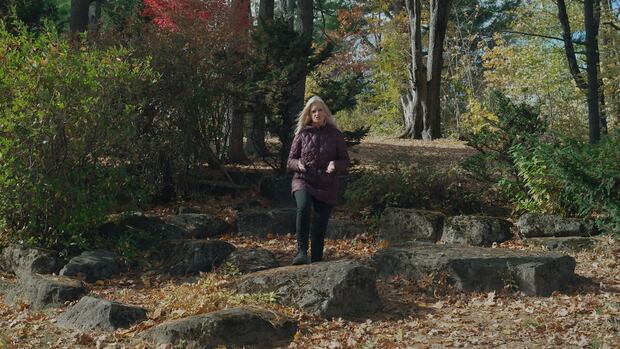
More than a decade after Brian Gallant’s Liberal government put a moratorium on shale gas development in New Brunswick, a different Liberal government is looking at ending it.
According to Dave Keighley, a professor in the earth sciences department at the University of New Brunswick in Fredericton, the answer is straightforward: we do not know.
“The only way to determine it is to … dig or drill,” Keighley remarked.
However, this does not imply that attempts have not been made to gather more data regarding the potential gas reserves.
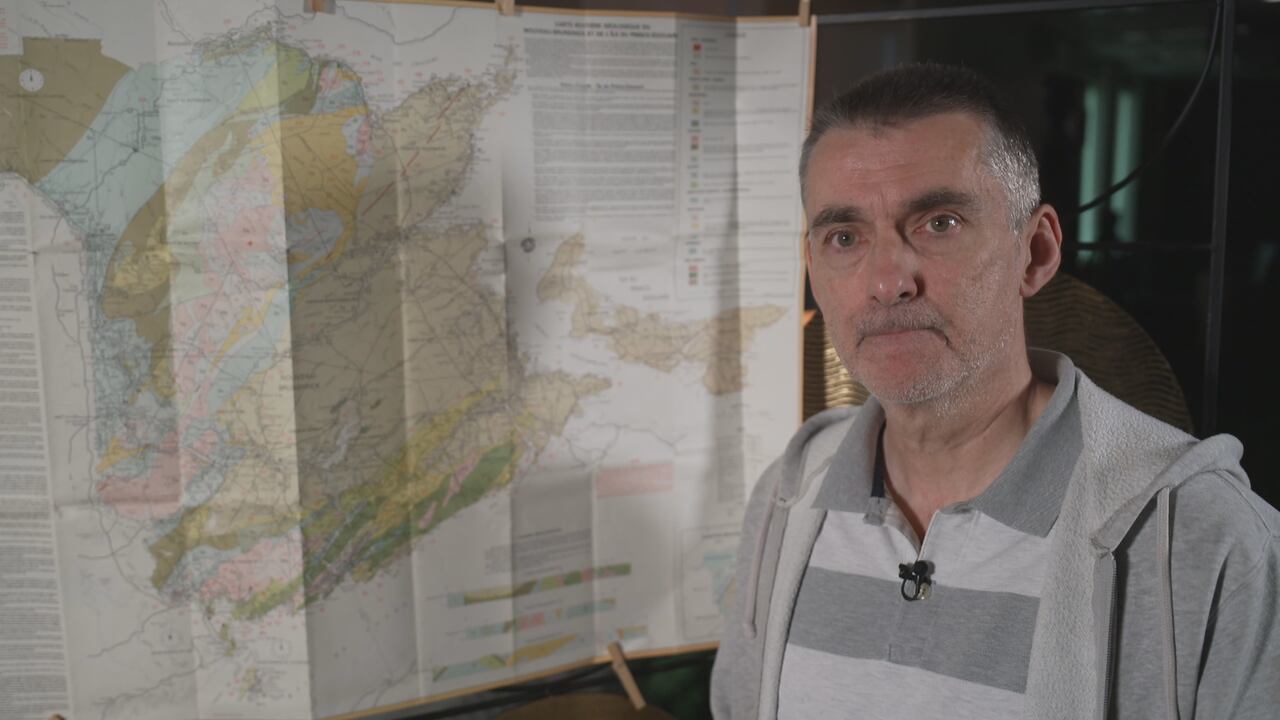
UNB geologist Dave Keighley stated that while estimates may provide some insight into gas quantities, the only definitive way to know is through drilling. (Aniekan Etuhube/CBC)
Prior to the moratorium, several seismic surveys were conducted in different areas of the province.
Keighley noted that this data offers insights into the extent of the shale and its depth.
It is also feasible to estimate the volume of gas the shale might hold, but without actual drilling, clarity remains elusive.
Estimates remain just that—estimates.
Keighley indicated that assessments for New Brunswick, based on the most optimistic criteria, suggest that the province’s regions have a 10 to 50 percent chance of containing shale gas.

Shale gas: what is it? And where can it be found in the province? Dave Keighley is a professor in the Department of Earth Sciences at the University of New Brunswick in Fredericton.
“That’s the most optimistic scenario, but we are still uncertain,” Keighley stated.
Lavoie emphasized that the presence of shale rock does not guarantee the existence of shale gas.
“In certain locations, shale exists, but it hasn’t been buried deeply enough for the organic matter to have transformed, hence there are no hydrocarbons in those shales,” Lavoie explained.
“It is essential to accurately assess the amount of organic content in the rock and the depth at which these rocks were buried.”
According to Lavoie, the highest likelihood of shale gas is found in southeastern New Brunswick, where the rocks are younger and possess a greater chance of containing the necessary organic matter for hydrocarbon production.
Conversely, in central and northern regions, the rocks are older and contain less organic material, resulting in minimal chances of finding significant gas deposits.
This article is part of the series Shale Gas Development Revisited: What’s Changed. CBC New Brunswick is examining what has shifted since the provincial government instituted a moratorium on shale gas exploration in 2014. The government is currently reviewing the moratorium until January 2027, when a decision will be made regarding its potential lifting. If you have a story or tip relating to this matter, please reach out: nbshalegas@cbc.ca.