

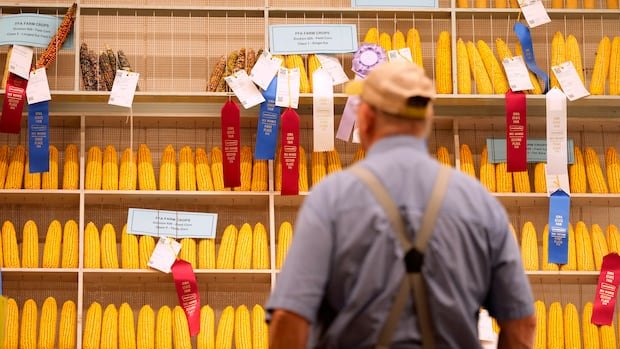

This weekend, a large crowd is drawn to the Iowa State Fair, a significant event featuring multiple days of entertainment, a rodeo, and a tradition of sculpting a life-sized butter cow annually since 1911. Similar to the Calgary Stampede in Canada, the Iowa State Fair serves as a vital platform for politicians to engage with voters, especially during the lead-up to the U.S. midterm elections. One prominent concern among Iowans this year is the impact of President Donald Trump’s trade policies.
Aaron Lehman, a fifth-generation family farmer and head of the Iowa Farmers Union, expressed his views on the trade war, stating that the policy has caused confusion among farmers and led to the loss of international customers. The uncertainty surrounding fair trade agreements has left farmers like Lehman apprehensive about their future, particularly with Canada being a significant export market for Iowa.
The looming threat of Trump’s proposed 50% tariffs on numerous Canadian goods could disrupt the longstanding trade relationship between the two countries. Efforts are underway to secure a trade deal over the weekend, but reaching a consensus remains elusive. The economic turbulence caused by these trade disputes has made succession planning and farm operations challenging for Lehman and others in the agricultural sector.
In addition to Lehman, other farmers in Iowa, such as Jack Ploen, voiced concerns about Trump’s trade policies, emphasizing the importance of Canada as a key trading partner. The economic uncertainty stemming from these policies has influenced political sentiments in Iowa, with recent polling indicating a shift in favor of the Democrats in upcoming elections.
Despite the challenges posed by the trade tensions, U.S. Trade Representative Jamieson Greer defended Trump’s tariff tactics during a recent visit to Iowa. While some Republican lawmakers in Iowa have supported Trump’s trade approach, there are indications of divisions within the party regarding the impact of these policies on various sectors.
As negotiations between Canada and the U.S. continue, significant disagreements persist, casting doubt on the possibility of a swift resolution. The federal government is preparing for potential outcomes, including the need to reintroduce American alcohol products into the market and address procurement rules that could impact Canadian suppliers. The looming deadline for tariff implementation adds pressure to the negotiations, with Canadian negotiators viewing it as a critical juncture in the talks.
The evolving trade dynamics between Canada and the U.S. are closely monitored by stakeholders on both sides, with the outcome of these negotiations likely to have far-reaching implications for various industries and political landscapes.
[Source](https://www.cbc.ca/news/politics/trump-tariffs-canada-united-states-iowa-state-fair-trade-deal-9.7308691)