

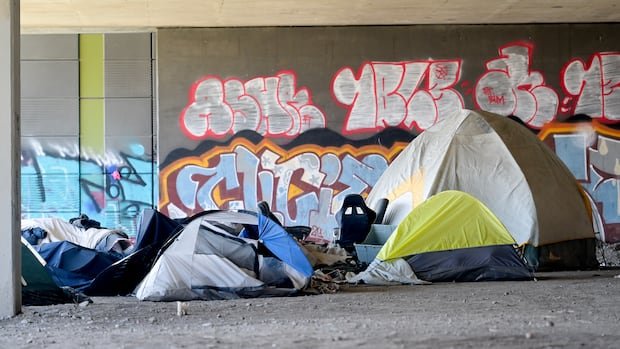

New findings released by the Université de Sherbrooke indicate a significant surge in fatalities among individuals without stable housing in Quebec, with a spike of approximately 180% observed between 2020 and 2024. The data reveals that the number of deaths among homeless individuals surged from 45 in 2020 to 127 in 2024, totaling 400 deaths over the period. Notably, Montreal recorded the highest death rate per capita, closely followed by the Outaouais region.
Dr. David-Martin Milot, a public health physician overseeing the project, expressed deep sorrow over the distressing trend, emphasizing the necessity for enhanced understanding to tailor interventions effectively. One pivotal objective of the study was to underscore the gravity of the situation using data to instigate a sense of urgency.
The initial phase of the study focused on fatalities detailed in Quebec coroners’ reports, which solely investigate deaths with ambiguous circumstances, potentially underestimating the actual number of homeless individuals who passed away. To rectify this, a new online platform has been launched to enable anyone to report the death of a homeless individual, aiming for more comprehensive documentation.
The study uncovered a 175% rise in deaths of homeless men and a more pronounced 211% increase among women. Shockingly, the average life expectancy for homeless men was approximately 47 years, contrasting starkly with 80 years for those with stable housing. The disparity was even more glaring for women, with an average life expectancy of 42 years for homeless women compared to 84 years for housed women.
Community leaders like Na’kuset and Diane Pilote emphasized the urgent need for tangible action, particularly for vulnerable groups like Indigenous women who are disproportionately affected. They called for increased government funding to provide secure housing and support services. The prevalence of violence against homeless women, as highlighted by Alex Desjardins, underscores the urgent need for improved shelter facilities and tailored support to ensure the safety and well-being of this marginalized demographic.
Efforts are underway to develop a comprehensive provincial strategy to combat homelessness, with an initial allocation of $28 million earmarked to expedite measures in regions heavily impacted by the crisis, including Greater Montreal, Quebec City, and the Outaouais region.