

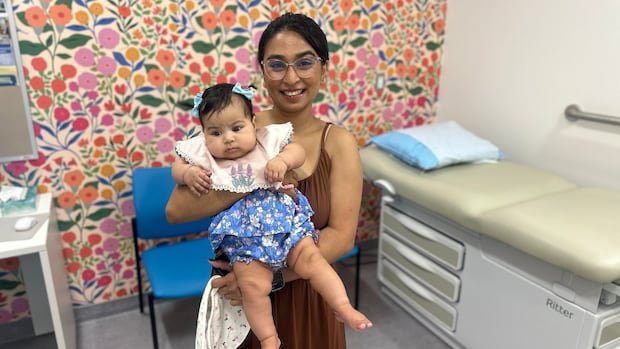

Sharika Sadaf had a contrasting experience in seeking mental health support during her second pregnancy compared to her first. Determined to receive more assistance this time, she reached out to The Midwives’ Clinic of East York-Don Mills.
Expressing her concerns about experiencing postpartum depression previously, Sadaf quickly obtained a referral to a psychiatrist within a week. The Women’s Reproductive Mental Health Program, initiated at Michael Garron Hospital last year, offers mothers mental health support at the hospital and in the community through the clinic. This initiative marks the first midwifery clinic in Ontario to have an onsite psychiatrist.
The primary objective is to simplify access to mental health care for new mothers without the need to navigate a separate hospital-based system. Sadaf highlighted the benefits of having a planned strategy for dealing with postpartum challenges, stating that such support was lacking during her first pregnancy.
The program has assisted over 150 mothers in managing their mental health throughout pregnancy and postpartum periods. Significantly, the partnership has reduced the wait time for initial appointments from an estimated six to nine months to an average of 27 days. Urgent care appointments are also set aside weekly to prevent individuals from resorting to emergency departments for treatment.
Mackenzie Macht, a registered midwife at the clinic, emphasized the importance of identifying mental health concerns early in prenatal care, recognizing the vulnerability of pregnancy and the postpartum period to mental health issues. Experts note that perinatal mood and anxiety disorders affect up to one in five women.
Dr. Neda Askari, a psychiatrist with Michael Garron Hospital’s Women’s Reproductive Mental Health Program, highlighted the significant impact of untreated perinatal mental health conditions on maternal health, pregnancy outcomes, infant development, and family well-being. The community-based approach aims to make mental health care more accessible and integrated into existing prenatal and postpartum care services, eliminating the need for separate hospital visits.
Askari underscored the advantage of incorporating mental health care into a familiar clinic setting, making patients feel more at ease and enhancing the overall care experience. Sadaf emphasized the transformative effect of having access to such comprehensive support, advocating for its availability to all mothers for a positive impact on both motherhood and childhood experiences.