

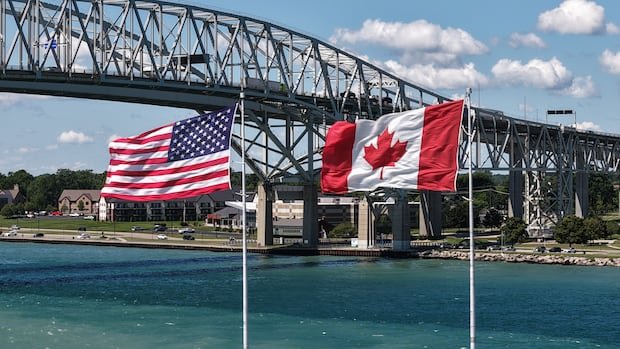

The recent actions from the White House have escalated tensions in the ongoing trade war between Canada and the U.S. by imposing bans on Canadian dairy, motorcycles, and certain alcohol products. Additionally, a fresh wave of 50% tariffs has been applied to a range of other goods, raising concerns about the potential impact on the Canadian economy.
Economists analyzing the situation suggest that while the overall economic impact may not be significant, specific industries are expected to bear the brunt of these measures. The White House’s retaliation against Canada’s counter-tariffs included bans on selected items and the introduction of 50% tariffs on products such as mattresses and paper goods, while removing tariffs on items like toilet paper, cement, and sugar.
According to a study by Derek Holt from Scotiabank, the new tariffs will affect around $3 billion worth of Canadian goods, with removed tariffs amounting to approximately $2 billion. Despite Canada exporting over $527 billion worth of goods to the U.S. in 2025, the impact of these measures is considered marginal.
The bans on alcohol, dairy, and motorcycles are projected to have minimal effects, as the quantities exported to the U.S. are relatively low. Alcohol exports, the highest among the three categories, were valued at $550 million last year, with the bans estimated to impact only $700 million worth of Canadian exports to the U.S.
While the economic risks associated with rising oil prices due to Middle East tensions are deemed more significant than the U.S. trade measures, some industries and regions in Canada are expected to face challenges. Chief economist Doug Porter from BMO notes that the value of newly tariffed and delisted items is approximately $2 billion, maintaining the country’s overall position.
Despite the relatively limited impact on the economy, the targeted industries are likely to experience significant disruptions. The uncertainty and rapid implementation of these measures pose challenges for businesses on both sides of the border, affecting business confidence and necessitating quick adjustments to mitigate potential losses.