

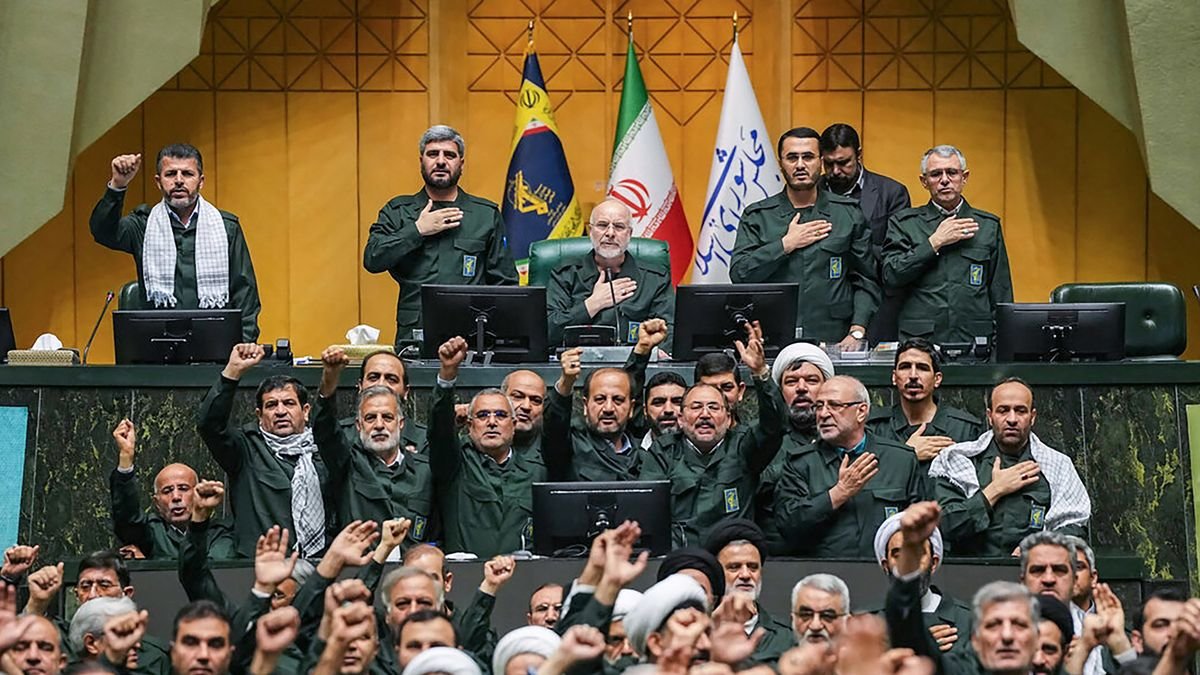

Tensions in the region are escalating following the US carrier fleet’s recent interception of an Iranian drone in the Arabian Sea. The possibility of rogue actions by semi-autonomous officers from the Islamic Revolutionary Guard Corps poses a significant risk of independent escalation. Military conflict, ranging from minor missile exchanges to full-scale war, remains a looming threat as diplomatic resolutions seem unlikely.
The USS Abraham Lincoln strike force, stationed 500 miles off the coast of Iran, could potentially launch an American-led attack. Additionally, Israel’s involvement in the situation is a crucial factor to consider. Despite potential US withdrawal or the implementation of a maritime blockade, there are indications that Israel is inclined to take further military actions against Iran.
Recent developments suggest that the welfare of protesters in Iran, where thousands have reportedly been killed, could be overshadowed in the upcoming days. The US demands include the complete cessation of nuclear enrichment within Iran, the removal of enriched Uranium, and strict limitations on Iran’s ballistic missile program.
Iran’s regime finds itself increasingly isolated and pressured, with its influence diminishing in the face of regional disapproval. The regime’s standing has been further weakened by recent events, including setbacks in South America and the Middle East. While internal demonstrations continue, the regime’s leadership, particularly the IRGC, remains resolute in its commitment to the revolutionary cause.
Speculations arise about the possibility of Ayatollah Khamenei and key officials seeking refuge in Moscow if the regime collapses, with substantial funds already being moved out of the country in contingency plans. The complex geopolitical landscape continues to evolve, with potential ramifications for the future of Iran and the wider Middle East.