

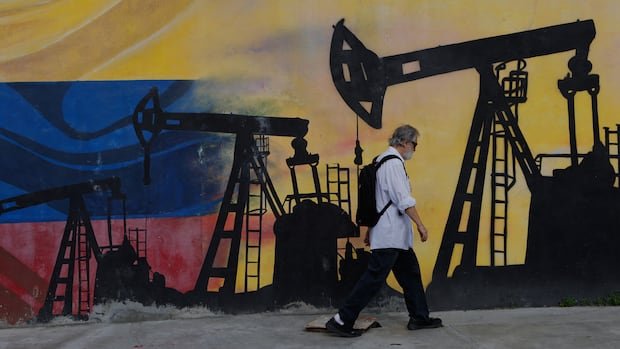

The White House has not provided much information beyond a social media post by U.S. President Donald Trump regarding what he refers to as the “LARGEST OIL DEAL IN WORLD HISTORY” in Venezuela. According to Trump, the deal disclosed on Friday aims to grant the United States a share in Venezuela’s extensive oil reserves, aligning with his objective of tapping into the country’s energy resources following the capture of then-President Nicolás Maduro by American forces in January.
Delcy Rodríguez, Venezuela’s acting president, hailed the agreement as a crucial step towards economic recovery and the modernization of the nation’s oil sector. However, key details such as the timeline for drilling the reserves and the financial responsibilities remain undisclosed as no formal agreement text has been made public yet.
The agreement involves the formation of a new private company by the U.S. government and an undisclosed private operator in Venezuela. This company has been granted rights to undeveloped oil fields for a century, focusing on 17 fields estimated to contain 65 billion barrels of oil. The deal is anticipated to attract $100 billion US in investments to Venezuela’s oil industry and generate over $209 billion US in taxes for Caracas.
U.S. Secretary of State Marco Rubio, Defence Secretary Pete Hegseth, and Rodríguez were reported to have negotiated the deal. The United States will hold a 55% effective output in the new private company, entailing ownership shares and the privilege to procure oil at production cost. The purchased oil will be allocated to the U.S. strategic oil reserves and military applications, as per an anonymous U.S. official.
The potential impact of this deal on Canada’s oil industry has been a subject of speculation. The revival of Venezuelan oil production could affect Canadian oil exports since both countries produce similar heavy crude. Over the years, Canadian oil has filled gaps in the U.S. market left by reduced Venezuelan exports. A surge in Venezuelan oil production would potentially introduce competition in the North American heavy crude market, influencing Canadian crude prices.
While the deal’s specifics remain unclear, uncertainties linger concerning the private operator’s identity, funding for necessary investments, and the breakdown of America’s ownership in the company. Convincing major U.S. oil companies to engage in the region may pose a challenge due to the existing political instability and infrastructure issues in Venezuela. Chevron, the sole active U.S. oil company in Venezuela, declined to comment, while Exxon Mobil also refrained from providing a statement.
The deal has the potential to bolster U.S. oil reserves and decrease reliance on oil imports from Canada and Mexico. However, logistical challenges and the actual value of Venezuela’s reserves, which might have been overstated under former President Hugo Chávez, could impede the eagerness of U.S. oil companies to invest in the venture.