

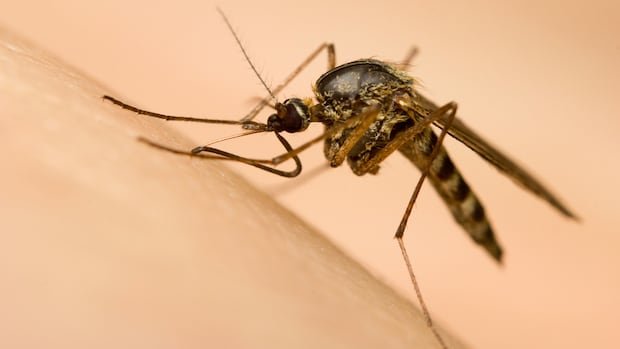

This summer, some prairie cities like Manitoba, Saskatchewan, and Alberta experienced a surge in mosquito populations, leading to a shortage of bug spray in stores due to high demand. Data from the City of Edmonton revealed a significant increase in mosquito numbers in July compared to the previous year. While not record-breaking, the spike in mosquitoes this year has been noticeable, according to Peter Daly, a technologist at the City of Edmonton.
Saskatoon and Winnipeg also reported higher mosquito numbers in July compared to the previous year. Experts attribute the mosquito boom in southern Ontario to the record rainfall experienced in the region, which has created ideal breeding conditions for mosquitoes like the Ochlerotatus trivittatus species. Fiona Hunter, a professor at Brock University, explained that the abundance of standing water from the heavy rains has provided ample breeding grounds for these floodwater mosquitoes.
The Ochlerotatus trivittatus species is known for its persistent biting behavior, leading to increased encounters with humans this year. Additionally, the heavy rainfall in the Greater Toronto Area and other parts of southern Ontario may have triggered the hatching of dormant mosquito eggs, contributing to the current mosquito population.
As temperatures begin to cool down, mosquito populations are expected to decrease. Mosquitoes struggle in extreme heat and are susceptible to drying out or dying in cold temperatures. Following a recent cold snap in Alberta, mosquito populations have significantly decreased. Although a resurgence in mosquito activity is possible with warmer temperatures, it is unlikely to reach the levels experienced in central Canada.