

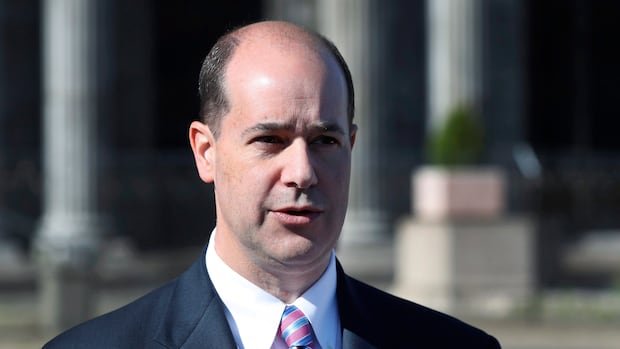

Matthew Moroun, the American owner of the Ambassador Bridge, met with senior Canadian government officials about the Gordie Howe International Bridge approximately three and a half months before the rival crossing officially opened. The details of the meeting, which took place on April 7, were revealed through federal briefing notes obtained under the Access to Information Act. Moroun, along with Kevin Kalczynski, a senior lawyer from the family’s companies, and Brennan Lee, a senior financial executive who is Moroun’s son-in-law, represented the American side. On the Canadian side, Housing Infrastructure and Communities Canada deputy minister Paul Halucha, assistant deputy minister Marco Presutti, and Jesse Tracey, a senior federal government lawyer, were present.
The purpose of the meeting, initiated by Moroun, included discussions that have been partially redacted in the documents. Despite efforts to contact the Ambassador Bridge for Moroun’s perspective and objectives during the meeting, no response was received. The new Gordie Howe International Bridge was anticipated to divert nearly half of the Ambassador Bridge’s traffic, according to U.S. government estimates. The Ambassador Bridge is a crucial link between Windsor, Ont., and Detroit, handling over $140 billion in merchandise trade in 2021, which represents about $390 million daily and 26% of Canada’s exports by road.
The Canadian government had vested interests in the meeting, aiming to open the $6.4 billion Gordie Howe bridge under significant political pressure. The briefing materials outlined the role of Halucha in listening to Moroun’s insights on corridor operations and unresolved issues as the new bridge neared service. However, many details concerning the issues discussed and the government’s post-meeting analysis were redacted.
The involvement of a private bridge owner, such as Moroun, in managing an international border crossing adds a unique element to the situation, according to Laurie Trautman from the Border Policy Research Institute at Western Washington University. The coexistence of a fully privately owned international crossing alongside a publicly owned competitor is unprecedented, raising transparency concerns amidst strained Canada-U.S. relations.
Discussions with private bridge owners facilitating trade to Canada are ongoing, according to Housing Infrastructure and Communities Canada. The department emphasized collaboration with stakeholders to enhance the trade corridor’s economic activity on both sides of the border. Following the meeting, a federal briefing note revealed Moroun’s acknowledgment of the Gordie Howe bridge proceeding to open, prompting adjustments in toll rates by the Ambassador Bridge to compete.
The emergence of the publicly owned Gordie Howe International Bridge posed a formidable challenge for the older and less accessible Ambassador Bridge. While strategies may have evolved with the development of the Gordie Howe bridge, the overarching objective for the Moroun family remained to safeguard their business interests. Over the years, the family pursued strategic land acquisitions and engaged in political lobbying, alongside legal challenges, to protect their monopoly over the border crossing.
The alignment between the Morouns and the Trump administration, characterized by a shared opposition to a publicly owned competitor, reflected a pro-private enterprise stance. The “America First” approach of the Trump administration resonated with the Morouns, despite potential repercussions on cross-border trade and the Ambassador Bridge itself.