

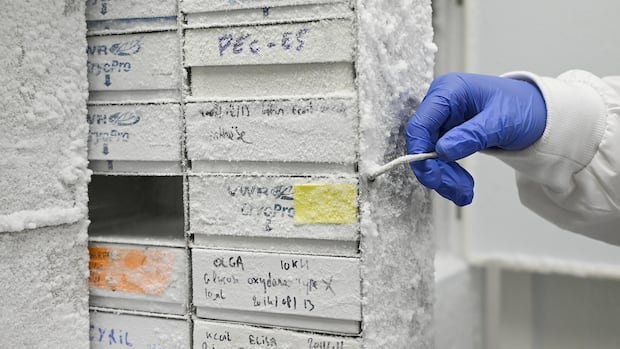

In a Polytechnique Montréal laboratory focused on biomedicine, researchers clad in white coats conduct experiments with animal protein growing in a vibrant orange solution. The shelves are lined with neatly labeled glass bottles containing a clear liquid, adjacent to computer screens where antibodies produced by the cells are analyzed. In another room, a large cryogenic freezer houses tubes with protein and cell samples crucial for vaccine and medicine development.
Six years after the unexpected onset of the COVID-19 pandemic, the Polytechnique lab takes the lead in Canada’s preparedness for future pandemics. The lab is actively involved in a federal initiative known as Ramp Up, which aims to bridge gaps in the biomanufacturing sector by partnering with research institutions across the country. Gregory De Crescenzo, the head researcher, stresses the importance of readiness, stating that it is not a question of if but when the next pandemic will strike.
With the rampant spread of vaccine misinformation during the pandemic, De Crescenzo believes that providing insights into their lab operations can help rebuild public trust in medical advancements. Ramp Up targets the acceleration of vaccine and biomedical procedures while also focusing on student training. Although the scientists primarily study viruses like influenza and avian flu, De Crescenzo highlights the versatility of the research across various diseases.
De Crescenzo emphasizes Ramp Up’s mission to prevent a recurrence of the shortcomings observed during the COVID-19 crisis, where a lack of collaboration among governments, academics, and industry hindered progress. Notably, the challenge of the supply chain is a key focus for Ramp Up, as Canada previously struggled with limited vaccine production capabilities.
The Polytechnique lab equips students and researchers with industry-standard tools, such as cell-growing tubes and industrial freezers for long-term sample preservation. Collaboration with partner labs helps identify crucial components like antibodies and viral proteins, which are then scaled up for industrial manufacturing. De Crescenzo likens the lab’s role to crafting recipes that are meticulously documented and transferred for industrial use.
While acknowledging the progress made since the COVID-19 outbreak, De Crescenzo stresses the need for ongoing efforts to ensure seamless scaling of lab-developed processes for industry application. He underscores the importance of unified efforts among government, academia, and industry for enhanced resilience and efficacy.
Infectious disease specialist Isaac Bogoch from the University of Toronto emphasizes the necessity of a comprehensive, multi-sectoral approach to pandemic preparedness. Bogoch praises the government’s investments in biomedicals but calls for improvements in transportation, food safety, and public health infrastructure to bolster overall readiness.
Ramp Up, initiated in 2024, collaborates with various institutions to address deficiencies in Canada’s biomanufacturing sector. The program anticipates a demand for over 15,000 highly skilled biomanufacturing workers by 2029. Health Canada reports substantial investments in enhancing the country’s pandemic response capabilities, including upgrading biocontainment facilities and fostering research hubs in partnership with leading institutions.
The government’s investments in vaccine, therapeutic, and biomanufacturing projects, totaling $2.5 billion since 2020, have led to significant progress in supply chain resilience. Health Canada emphasizes the importance of timely access to life-saving medications during public health crises and plans to unveil an updated emergency response strategy in 2027 to enhance coordination across governmental levels and with international and Indigenous partners.
Master’s student Marie-Gael Tchummo credits her involvement with Ramp Up for helping address vaccine hesitancy within her circle. Tchummo notes that open discussions about her research have alleviated skepticism among family and friends regarding COVID vaccines. Transparency and public trust are deemed vital by both Tchummo and De Crescenzo for the success of initiatives like Ramp Up.