


In a recent development, a new route has been proposed for a significant infrastructure project in the Northwest Territories. This revised plan differs from previous proposals that were anticipated to bring substantial economic advantages to the region. Despite these changes, the territory’s finance minister remains unconcerned.
The Tłı̨chǫ government and Yellowknives Dene First Nation (YKDFN) jointly disclosed a new proposed path for the Arctic economic and security corridor, a project aimed at establishing an all-season road connecting the Northwest Territories and Nunavut. While specific timelines for its construction are yet to be determined, both governments have endorsed this route as the optimal choice for maximizing economic benefits while safeguarding sensitive caribou habitats.
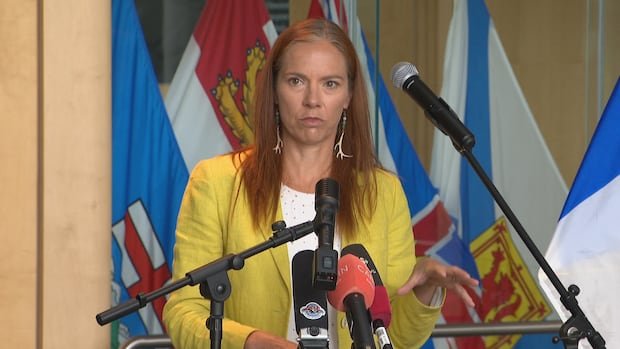
Caroline Wawzonek, the Finance Minister of the Northwest Territories, expressed support for the new route, emphasizing the importance of constructing a road that is not only cost-effective and prosperous but also aligns with the region’s commitment to land stewardship, including the protection of caribou.
Although the proposed route deviates westward from a previous plan, regional leaders assert that it still holds significant potential for critical minerals. The initial intention was to pass through the slave geological province corridor, an area rich in resources situated northeast of Yellowknife. The territorial government had previously touted this route as offering the greatest economic advantages for the Northwest Territories.
Wawzonek defended the decision to alter the route during a recent news conference, revealing that the territory had paused its original plans following requests from the Tłı̨chǫ government and Yellowknives Dene First Nation. The primary motivation for the change was to identify a path that would lead to the actual construction of the road, as emphasized by Wawzonek.
The new proposed corridor aims to bypass sensitive caribou habitats, considering the drastic decline in the Bathurst caribou population over the past three decades. This 400-kilometre corridor is intended to link the Grays Bay Road and Port in Nunavut with the N.W.T. highway system, forming part of the nation-building projects announced earlier this year to enhance military presence and mineral exploration in Northern Canada.
Leaders from the Tłı̨chǫ government and YKDFN have based the route on a comprehensive analysis encompassing technical assessments, traditional knowledge, community feedback, and economic evaluations. Despite this consensus, Dettah Chief Ernest Betsina clarified that the agreement does not signify authorization for construction; further engagement and environmental analyses are still required.
Moving forward, the Tłı̨chǫ government and Yellowknives Dene First Nation will facilitate opportunities for their members, neighboring Indigenous groups, and community stakeholders to provide input on the proposed route.