

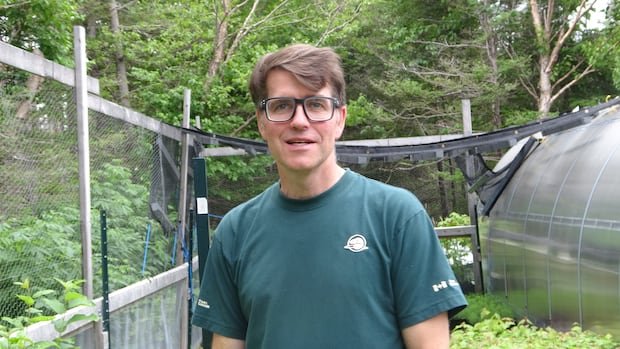

Crews are undertaking a massive tree planting initiative in a vast national park in western Newfoundland to aid in the restoration of its forests, which were heavily impacted by a significant moose population. Darroch Whitaker, an ecosystems scientist with Parks Canada in Gros Morne National Park, stated that over 730,000 trees have been planted since 2023 in areas previously dominated by moose, with plans to continue planting for another three years to reach a total of 1.25 million trees covering approximately four square kilometers.
The reforestation efforts are not solely focused on replacing the trees consumed by moose but also on selecting tree species capable of thriving in warmer climates to build resilient forests that can better withstand the effects of climate change. Whitaker emphasized the importance of planting trees that can endure for generations to come, taking into account the projected changes in climate over the next few decades.
Gros Morne National Park, renowned for its majestic fjords and boreal forests intersected by rivers and waterfalls, spans 1,805 square kilometers and was established in 1973 as the second-largest national park in Atlantic Canada. While moose are abundant throughout Newfoundland, their numbers were particularly high in Gros Morne due to a historical hunting ban that protected them from human predators, their primary threat on the island.
During the 1990s, the park harbored around 6,500 moose, with certain regions hosting six or more animals per square kilometer, marking some of the highest moose densities ever recorded globally. The unregulated moose population wreaked havoc on the ecosystem, consuming vast quantities of young trees and impeding natural forest regeneration processes, leading to the formation of barren patches known as “moose meadows” within the park.
To address this issue, moose hunting was permitted in the park in 2011, resulting in a reduction of the moose population to a more sustainable level of 2,000 animals. In 2023, efforts to restore the forest began with the planting of two-year-old saplings in the moose meadows. The saplings, many of which are cultivated at the Rocky Harbour tree nursery, include a mix of tree species like black and white spruce, balsam fir, yellow birch, white pine, and wild cherry, selected for their adaptability to anticipated warmer temperatures in the future.
By incorporating seeds from the southern regions of the park, the planting initiative aims to introduce trees already acclimated to the changing climate, providing them with a better chance of survival and growth. Whitaker emphasized the significance of aiding tree migration to match the pace of climate change, as trees are stationary once planted and may require assistance to adapt to evolving environmental conditions.