

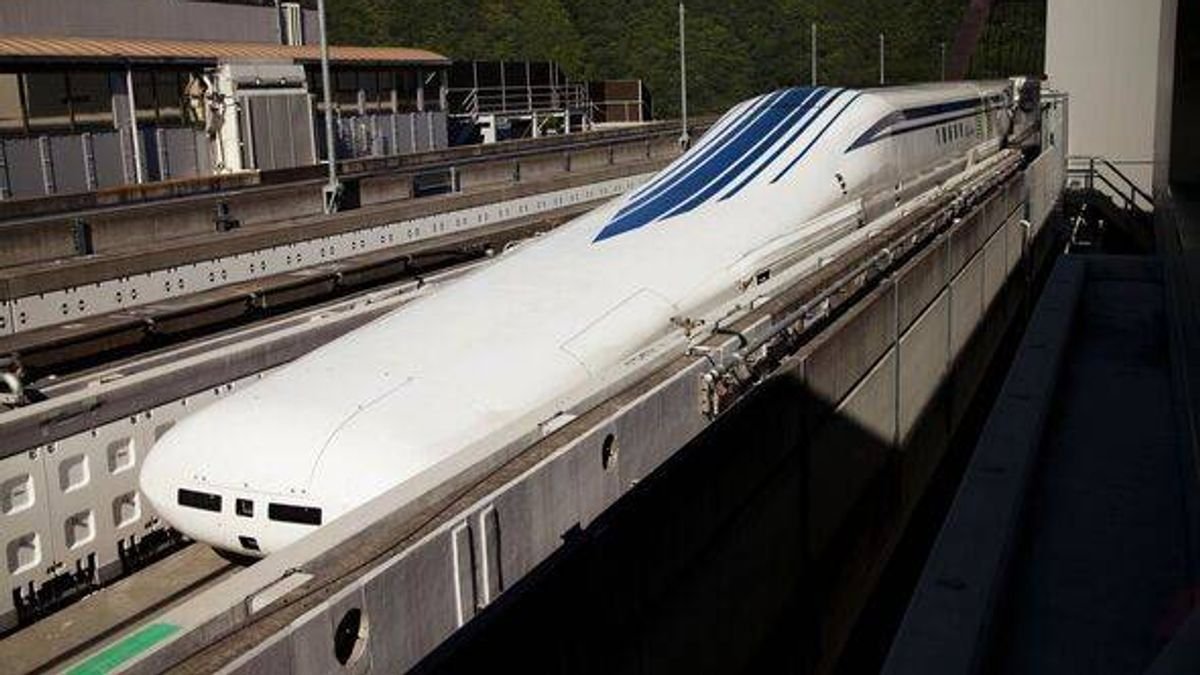

A high-speed train currently in development could potentially transport passengers from London to Edinburgh in about an hour. The L0 Series, a Japanese innovation, is an electric train capable of speeds up to 375mph, making it the fastest train globally.
This advanced machine, currently undergoing testing, utilizes Maglev technology for propulsion. Maglev functions by magnetically levitating the train above the tracks and then utilizing an electric motor for forward movement. These trains essentially float through the air propelled by magnets and electricity, enabling them to achieve remarkable speeds.
The L0 Series, as reported by Top Gear, is expected to operate at approximately 311mph once fully functional, allowing it to journey from Tokyo to Osaka in around an hour.
If introduced, the L0 Series would reduce the travel time from London to Penzance in Cornwall to just under an hour. A similar duration would apply to a trip between London and Edinburgh. Currently, the journey between these iconic UK cities by train takes nearly five hours.
Additionally, in April 2015, the L0 Series covered an impressive 2,525 miles in a single day, equivalent to traveling from London to Sulina in Romania and back.
However, the remarkable engineering achievement of the L0 Series comes with a hefty price tag. The project has faced delays due to escalating costs, now reaching a staggering £52 billion.
The Chuo Shinkansen line, which will accommodate the train, will link Tokyo and Nagoya.
“The maglev project has encountered challenges in excavating tunnels required for the high-speed train,” as reported by The Asahi Shimbun.
Approximately 85% of the project involves tunnel construction, according to a board member overseeing the endeavor.
JR Central’s board approved the revised budget on October 29, with the organization noting that the 2035 target completion date is tentative.
Meanwhile, in the UK, the Government has confirmed the revival of Northern Powerhouse Rail (NPR) to enhance connectivity between northern cities, reducing travel times significantly.
Passengers will soon be able to travel more swiftly between destinations such as Leeds, York, Bradford, Sheffield, Liverpool, and Manchester thanks to NPR.
An initial £1.1 billion has been allocated for preparation and planning, with construction expected to start around 2030. The overall improvements, totaling £45 billion, will include a new railway station in Bradford and upgrades to multiple stations.