

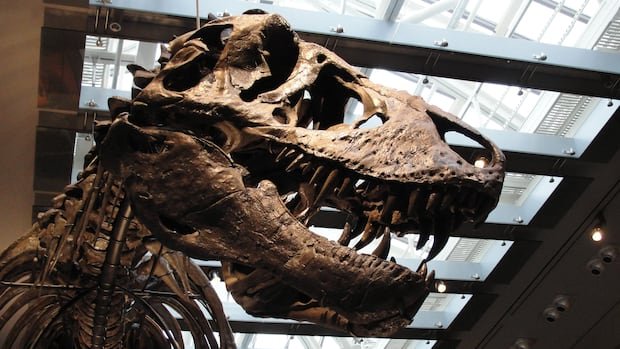

Researchers have utilized chemistry to determine the body temperature of two Tyrannosaurus rex dinosaurs, shedding light on the debate surrounding whether dinosaurs were warm-blooded. Aradhna Tripati, a geochemist and professor at the University of California, Los Angeles, explained the complex process involved in the study published in the journal Science Advances. She highlighted the challenges of directly measuring temperatures in extinct animals like T. rex due to their extinction millions of years ago.
Instead of traditional methods, scientists relied on a chemical technique involving the analysis of hard tissues such as tooth enamel and eggshells. These tissues contain a mineral known as bioapatite, which exhibits variations in chemical bonding based on temperature. By studying the isotopic composition in these materials, researchers could estimate the body temperature of ancient creatures like dinosaurs.
Previous studies by UCLA scientists had already suggested that certain dinosaurs were warm-blooded, based on similar analyses conducted on eggshells and teeth from different species. The recent study focused on T. rex, a species known for its thin tooth enamel, making the analysis a challenging task.
Through meticulous analysis of tooth samples from a young adult T. rex named Thomas, researchers estimated that the dinosaur’s body temperature ranged between 33.8°C and 38.8°C. This temperature range is comparable to that of large mammals and flightless birds, indicating a potentially warm-blooded metabolism similar to modern-day animals like elephants and ostriches.
The findings have implications for understanding the behavior and habitat range of tyrannosaurs. A warm-blooded T. rex would have had the ability to thrive in diverse environments, possibly including colder regions like the Arctic. These revelations challenge previous assumptions about dinosaur physiology and adaptation to different climates.
Paleontologists like Anthony Fiorillo have praised the study for providing compelling evidence supporting the theory of warm-blooded dinosaurs, offering new insights into how these ancient creatures may have lived and evolved. The research opens up avenues for further exploration into the metabolic characteristics of dinosaurs and their ecological adaptations.
While the study indicates that T. rex may have exhibited warm-blooded traits, there are ongoing debates about the extent of their metabolism compared to modern warm-blooded animals. The research prompts further inquiries into the dietary requirements and ecological constraints faced by large dinosaurs like T. rex.
Tag: rewrite-pending