

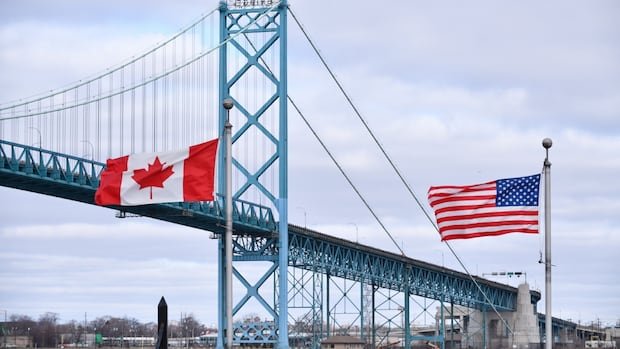

Cocaine remains the top seized substance in the southwestern region of Ontario along the Canada-U.S. border, as per data from both countries. From January to June this year, the Canada Border Services Agency (CBSA) confiscated over 827,000 grams of cocaine valued at more than $82 million at various border points including the Ambassador Bridge, Detroit-Windsor Tunnel, Blue Water Bridge, Peace Bridge, Queenston Bridge, Rainbow Bridge, and Walpole Island.
In the previous year, CBSA seized 1,631,981 grams of cocaine, with a similar amount confiscated in 2024 totaling over $150 million each year. Chief of operations at the Ambassador Bridge, Justin Morgan, emphasized that a significant portion of narcotics intercepted are originating from the United States.
Similarly, U.S. Customs and Border Protection (CBP) officials reported that cocaine topped the list of seized substances at the same border crossings in the southwestern region. In 2024, 927,142 grams were seized, with the figure escalating to 2,092,875 grams in 2025.
Furthermore, the CBP noted a higher number of marijuana seizures (1,797,133 grams) compared to cocaine (242,218 grams) between October 2025 and July 2026. However, Benoît Gomis, a lecturer at the Munk School of Global Affairs and Public Policy, cautioned that drug seizure data may not fully capture the extent of illegal substance trafficking across the border.
Gomis highlighted the allure of cocaine to criminal networks due to its stable source primarily in Colombia and Peru. The drug’s ease of smuggling, coupled with well-established distribution networks, contributes to its appeal among traffickers. Gomis also pointed out an upward trend in cocaine consumption, with increasing purity posing heightened dangers.
The United Nations Office on Drugs and Crime has flagged global drug trafficking, emphasizing the significant impact of cocaine abuse in Canada. The organization’s data traces cocaine trafficking routes originating in South America and extending into North America.
In terms of border security, CBSA utilizes various tactics to detect illicit substances, including intelligence-based targeting and advanced inspection technologies. At the newly opened Gordie Howe International Bridge, enhanced detection capabilities such as X-ray technology streamline commercial truck inspections, enhancing border security measures.
With a focus on combating drug trafficking, CBSA remains vigilant in deploying tools like detector dogs and mobile X-ray units to bolster interception efforts. The Gordie Howe Bridge’s advanced facilities enable thorough examination of incoming packages, particularly those potentially containing hazardous substances like fentanyl or methamphetamine.