

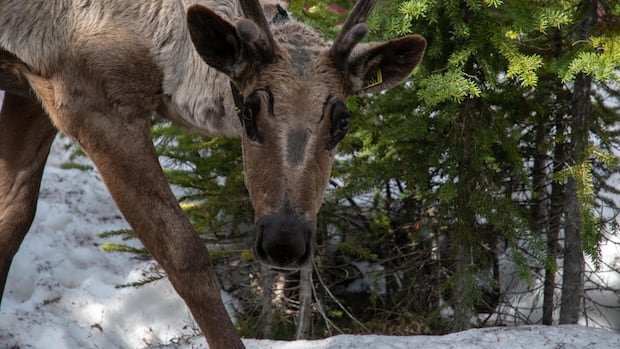

Five caribou that were raised in captivity have been successfully released into Jasper National Park’s Tonquin Valley to join the wild caribou population. This initiative is part of a conservation breeding program by Parks Canada aimed at bolstering the caribou population in the region.
Parks Canada has been actively involved in capturing wild caribou over the past two years and bringing them to a specialized breeding facility located 35 kilometers south of the Jasper townsite. In June, the agency announced the first release of caribou, which included four male yearlings born in captivity and one adult male from the Brazeau herd brought in for breeding purposes.
The Caribou Recovery Program’s program manager, Jean-Francois Bisaillon, expressed the emotional significance of witnessing the caribou venture into the wilderness on June 24, highlighting it as a major accomplishment for the caribou population.
Caribou populations have been designated as species at risk in Canada for more than two decades due to habitat fragmentation and increased wolf predation resulting from industrial activities. The Parks Canada program was established over a decade ago to prevent the local extinction of caribou in the Rocky Mountains.
Currently, there are only 50 wild caribou, with 11 reproducing females, remaining in the Jasper-Banff local population unit. Bisaillon emphasized the importance of maintaining a minimum number of reproducing females in a caribou herd for it to be self-sustaining, stating that the current population is on the brink of that critical threshold.
Leading up to the recent release, Parks Canada captured ten wild caribou, including seven pregnant females, within Jasper National Park in March 2025. Subsequently, seven healthy calves were born, and additional wild caribou were introduced to the breeding herd in March 2026.
The release of the five male caribou in June marked a significant milestone as they transitioned from captivity to the wild habitat of Jasper National Park. The caribou were carefully acclimated to their new surroundings in a temporary soft-release pen near Amethyst Lake before being fully released into the wild.
The successful integration of the captive caribou with the wild herd was monitored through GPS collar data, demonstrating the effectiveness of the program in reestablishing the caribou population in the area. The female calves born in captivity will continue to contribute to the breeding herd to ensure the sustainability of the captive population.
The overarching goal of the program is to increase the Tonquin herd to 200 individuals over the next decade and potentially reintroduce the Brazeau and Maligne herds in the future.
Ecologist Mark Boyce from the University of Alberta highlighted the impact of industrial activities on caribou decline, particularly emphasizing the disruption caused by the forestry and oil industries. He explained how these activities create favorable conditions for prey animals like deer, elk, and moose, leading to an increase in wolf populations that prey on caribou.
While Jasper National Park is shielded from forestry and oil development, Bisaillon underscored the significance of managing wolf populations to mitigate the decline of caribou within the park. He also raised concerns about the aftermath of the 2024 Jasper wildfire, which could potentially boost wolf populations due to changes in vegetation that support prey animals.
The ultimate aim is to establish a self-sustaining ecosystem without human intervention, ensuring the long-term survival and thriving of the caribou population in Jasper National Park.