

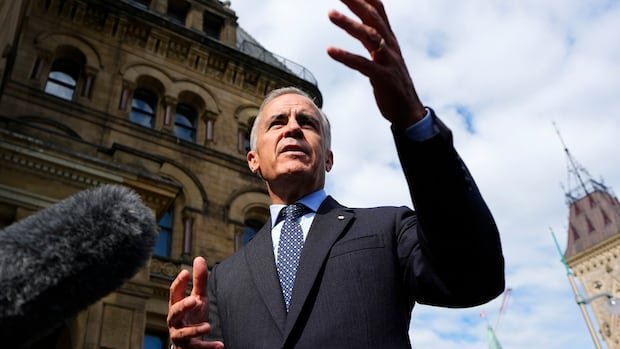

Just before Canada is set to impose counter-tariffs on $27.6 billion worth of U.S. goods, there is no intention from both sides to engage in negotiation talks. The Prime Minister’s Office confirmed that Prime Minister Mark Carney and U.S. President Donald Trump have no scheduled calls for Monday, with no plans for Canadian trade negotiators to resume discussions before the 12:01 a.m. ET Tuesday deadline. Over 700 American products are expected to be affected by the impending counter-tariffs, ranging from 15 to 50 percent. These tariffs are a response to Trump’s recent 50 percent tariffs on Canadian goods following the breakdown of trade talks last month.
The sectors facing the highest tariffs are those most impacted by U.S. tariffs, including steel, dairy, and wood products. In an exclusive interview with CBC News, U.S. Trade Representative Jamieson Greer cautioned against further retaliation by Canada, hinting at potential bans on Canadian products. Former Prime Minister Jean Chrétien expressed support for the counter-tariffs and suggested that Canada might need to consider additional measures, such as imposing export taxes in the future.
Conservative Leader Pierre Poilievre urged the federal government to be transparent with Canadians about the repercussions of the retaliatory tariffs on families and businesses. He emphasized the importance of sharing details about the failed Canada-U.S. trade deal and the government’s plan moving forward. While Ottawa has not disclosed the anticipated impact of the counter-tariffs, it has announced $7.5 billion in support for workers and businesses affected by the trade war.
Speaking to Fox News, Greer attributed the breakdown in talks to Canada and placed the responsibility on Ottawa to restart negotiations. Prime Minister Carney cited the U.S.’s introduction of new terms that were deemed unfavorable to Canada as the reason for the talks collapsing. Despite the tensions, Carney expressed openness to returning to the negotiating table if the U.S. shows sincerity in finalizing a trade deal.
Trump continued to criticize Canada after the failed talks, even threatening to halt all trade with the country. He raised concerns about Canada’s exchange rate and targeted a Canadian aircraft manufacturer, questioning its operations in the U.S. and demanding a change in approach to accessing American markets. Bombardier, the Canadian aircraft manufacturer, already has a U.S.-based factory and a significant presence in the country, with about half of its aircraft fleet operating in the U.S.