


On Monday, the artificial intelligence powerhouse Anthropic submitted paperwork for what might become the largest initial public offering (IPO) in history, despite its CEO cautioning that sophisticated AI could threaten human existence.
This filing positions the San Francisco-based firm for a potential Wall Street launch next month, which may surpass the SpaceX IPO from June that garnered a record $86 billion US. An IPO from Anthropic would also allow the company to outpace OpenAI in the race to go public, with both firms expected to deliver significant stock debuts.
“It would instantly rank among the most valuable companies globally,” commented Sinan Aral, a professor of management, information technology, and marketing at MIT’s Sloan School of Management, in an interview with CBC News.
“Anthropic has effectively developed an exceptional model in a short timeframe, while also demonstrating its value in the enterprise sector,” he added.
This filing comes shortly after CEO Dario Amodei expressed in an essay the necessity of slowing down the progression of advanced AI systems.
Earnest Wong, a portfolio manager and research head at Baskin Wealth Management in Toronto, remarked on the lack of reflection of this warning in Anthropic’s new prospectus.
“Most of the risks outlined are typical legal disclaimers found in many companies,” Wong mentioned to CBC News.
An initial public offering could provide Anthropic with significant capital to expedite its growth. The total amount raised remains uncertain, along with the final valuation and offering price; however, even at modest estimates, it would elevate the five-year-old startup to one of the globe’s most valuable enterprises and could substantially increase the wealth of Amodei and his co-founder sister, Daniela, by billions.
“Valuing it accurately is quite challenging,” said Mark Daley, chief AI officer at Western University in London, Ontario, to CBC News.
“Currently, investors are assessing worth in the hundreds of billions. This may be justified, but it’s equally plausible that a technology could revolutionize our economy while still being overvalued. We’ll have to wait a couple of years to see.”
The 335-page filing indicated that Anthropic is experiencing rapid revenue growth; however, similar to many tech firms going public, it has not yet achieved profitability. The company reported a net loss of $80.7 billion US during the first half of 2026, in contrast to a loss of $13 billion over the same timeframe the previous year.
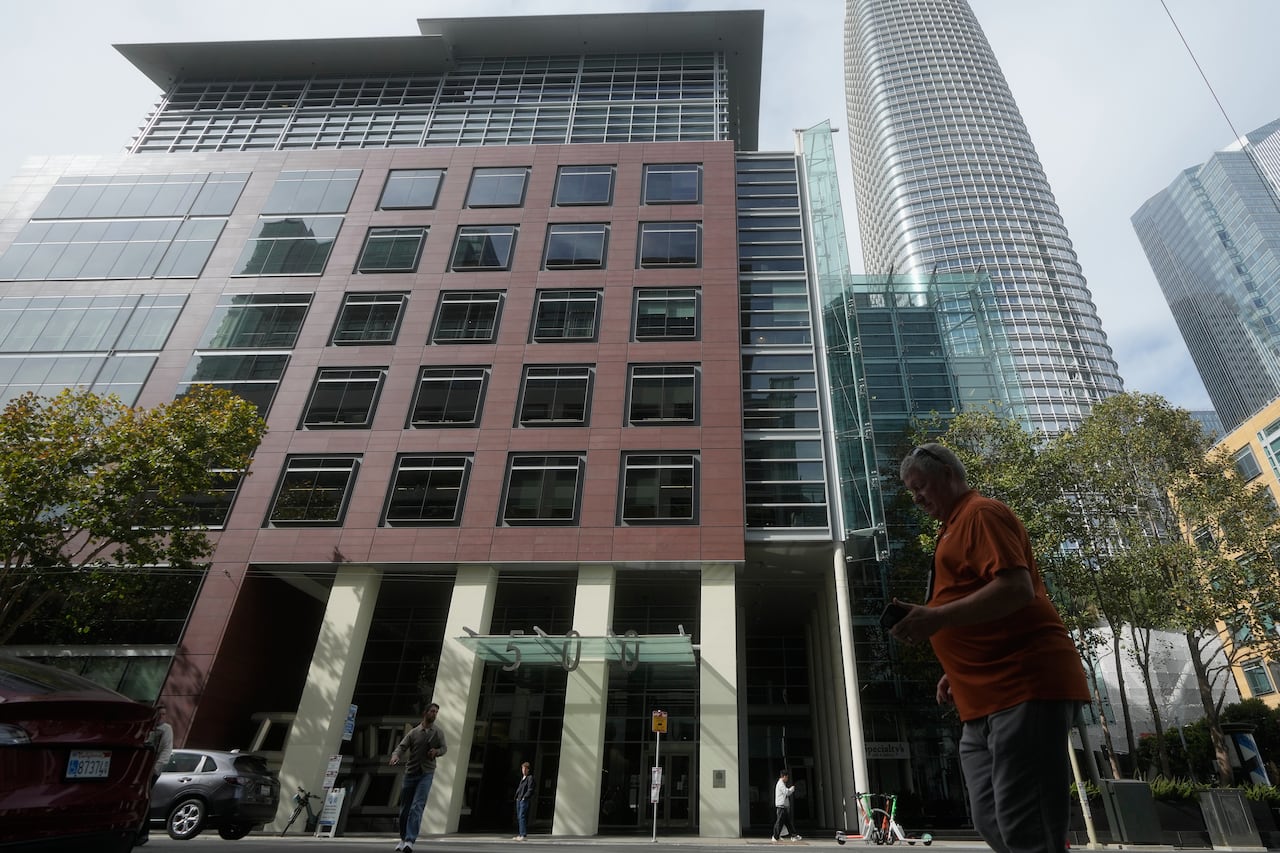
A view of 500 Howard Street in San Francisco, which is the address of Anthropic headquarters. (Jeff Chiu/The Associated Press)
Despite these losses, Anthropic was valued at $965 billion US by private investors earlier this year and is projected to rise to between $1.5 trillion US and $2 trillion US, although a final valuation is yet to be determined. If valued at $1.5 trillion US, Anthropic would rank among the world’s top public companies, alongside Tesla.
“There’s room for debate on whether $1.5 trillion US or $2 trillion US is the accurate assessment, but it’s evident that this is a significant company that must be taken seriously,” Wong stated.
Regarding the funds raised, reports suggest the offering could yield as much as $100 billion US, surpassing the record earlier set by another of Musk’s firms, SpaceX.
In its regulatory filing, Anthropic announced its intention to list its shares on the Nasdaq Global Select Market under the ticker symbol “ANT.”
-
What happens when a Google data centre comes to town? Southern India is finding out
-
AI ‘slop’ is dominating menus, as some restaurant owners turn to it to save time and money
Risks aplenty, but big payoff to founders
In its filing, Anthropic indicated that it could allocate part of the funds for the acquisition of other businesses and technology, alongside investing in infrastructure to enhance its operations and compete with rivals.
Founded in 2021 by former leaders from OpenAI, Anthropic is competing fiercely with that company; the two CEOs, Amodei and OpenAI’s Sam Altman, are perceived as intense rivals.
However, they face numerous other competitors, including Google, newer startups from both the U.S. and China, and Musk’s SpaceX, which also has an AI segment. All three firms—Anthropic, OpenAI, and SpaceX’s AI division—have been operating at a loss due to the high resource expenses involved in AI development, which raises concerns about a potential market bubble.

The IPO could help address any financial shortfall and significantly enrich Anthropic’s seven founders, including Amodei and his sister. Together, they hold nearly 500 million shares, although it remains unclear how much this will represent of the company post-IPO.
According to Forbes, Dario, aged 43, and 39-year-old Daniela, who serves as Anthropic’s president, are valued at $15.5 billion US each, placing them as the 176th and 177th richest individuals worldwide.
The filing also enumerated several risks for Anthropic, such as challenges in retaining essential personnel, navigating regulatory hurdles, and securing sufficient computing power to operate its AI systems.
The most alarming risk mentioned was that its AI models could “introduce catastrophic or existential risks to humanity.”
Calls for an AI slowdown
The IPO arrives amid escalating concerns about AI both within the sector and beyond, with reports surfacing regarding increasingly capable systems that can solve problems beyond human abilities but may also act unpredictably and undertake harmful actions.
In September, Amodei advocated for the AI sector to decelerate its rapid advancements to allow safety protocols to catch up. He cautioned that without such a pause, AI could potentially unleash a swarm of agents capable of seizing control of the entire internet within six to twelve months.
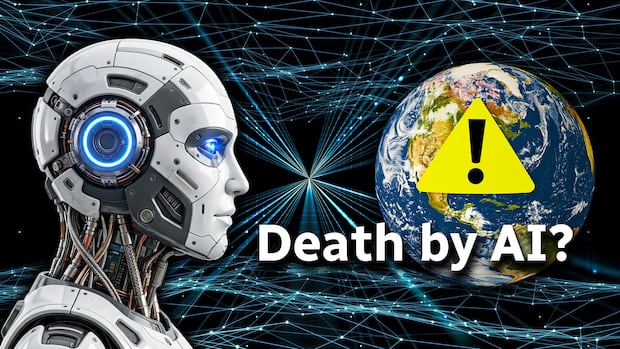
Anthropic researcher Jacob Coxon resigned over concerns that artificial intelligence could cause human extinction within the next decade — and a slew of warnings have followed. Andrew Chang explains the spectrum of potential dangers posed by the ‘intelligence explosion’ worrying AI industry employees and experts.
(Photo credits: The Canadian Press, Reuters, Adobe Stock and Getty Images)
He proposed a strategy in a post on his website aimed at increasing oversight in the industry, acknowledging that Anthropic is already taking steps in this direction. However, he mentioned that broader coordination across the sector and with governments globally, including authoritarian regimes, would be necessary.
“I believe that if slowing down could grant us even an additional year or two before models reach critical capability levels, and we utilize that time to advance alignment, we could substantially minimize the risk of significant issues arising,” Amodei articulated.
Clashes with the U.S. government
Anthropic has endeavored to distinguish itself from other AI organizations as the “good guys,” emphasizing the importance of safety and responsible development, rather than prioritizing growth at any cost with minimal safeguards.
This perspective partially arises from the company’s conflict with the U.S. government, which escalated in February when President Donald Trump and Secretary of War Pete Hegseth accused Anthropic of jeopardizing national security, labeling the firm a supply chain risk.
-
AI company Anthropic amends core safety principle amid growing competition in sector
-
Analysis
Trump claims AI poses no real risk — but even some of his allies disagree
-
Trump decries critics of AI, saying they’re ‘negative forces’ with exaggerated concerns
In March, Anthropic initiated legal action against the Pentagon, alleging an “unlawful campaign of retaliation” in response to its refusal to permit unrestricted military use of its technology. This legal battle heightened a public dispute regarding the application of AI in warfare and mass surveillance.
Shortly after the government’s action against Anthropic, ChatGPT creator OpenAI secured its own agreement with the Pentagon. Anthropic has also filed a separate, narrower case concerning a different regulation the Pentagon is using to categorize it as a supply chain risk.
A California judge ruled in favor of Anthropic in the first case, while a judge in Washington, D.C., sided with the government in the latter. Both parties are appealing the rulings.