

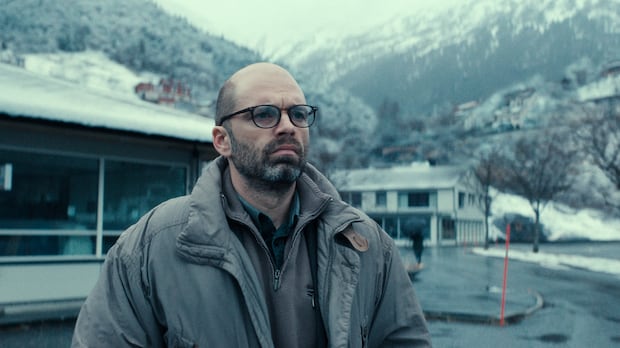

The film Fjord, a recipient of the Palme d’Or and a contender for an Oscar, deviates from the usual Hollywood favorites among critics.
The narrative centers around a Romanian family with strong Christian values who clash with the Norwegian child-care system, which views their parenting style as possibly abusive — a setup ripe for controversy.
The dilemma, however, lies in the fact that audiences are unsure who to direct their anger towards.
Director Cristian Mungiu intended for this ambiguity — to create a narrative that prompts each viewer to interpret it in a way that suggests he is criticizing someone else.
With reactions ranging from praise for his genius to accusations of bias and reserve, one could argue he achieved his goal. But what is the rationale behind producing a film that lacks a clear stance? CBC News engaged with Mungiu and his lead actor, Sebastian Stan, to delve deeper.
This interview has been modified for brevity and clarity.
Do you believe that true objectivity in filmmaking is achievable, and was it something you aimed for in this project?
Cristian Mungiu: I believe it is indeed possible to create films like this one, where the narrative is not shaped by my personal perspective as a citizen.
If I had taken a side, the opposing view wouldn’t engage with the film in the same way. I see this film as a catalyst for a broader discussion — one that transcends the film’s narrative and speaks to contemporary society. The essence of the film is to encourage us to hear opposing arguments, even if they don’t sway our beliefs. If we persist in thinking we are the sole possessors of truth, we find ourselves in a standstill, much like the divided perspectives in the U.S., where half the populace holds conservative beliefs while the other half leans progressive.
Once a film is released and shown publicly, various interpretations can arise. While it’s impossible to address every misunderstanding, I strive to clarify that this narrative is not solely about Norway and Romania. It pertains to the universal experiences we face today.
Sebastian, not too long ago, the Canadian film The Apprentice achieved remarkable success at the Canadian Screen Awards, despite facing challenges reaching audiences. Both of these roles ignite conversations but also present complexities. Was this duality an intentional element of your choice?
Sebastian Stan: That film was quite different, but just as significant to me. The common thread here is my desire to collaborate with fearless directors like [The Apprentice director] Ali Abbasi and Cristian, who both seek the truth without prejudice. They aim to open up dialogue.
There are inherent challenges, yet that is also appealing. It’s what you ultimately want, especially in today’s climate where many prefer to be told what to feel and think. I feel fortunate to have been able to immediately follow up one project with another of equal significance.
-
REVIEW
Stop-motion movie Wildwood is a staggering masterpiece. It’s a miracle it exists at all
-
Loved You Can See Everything? Thank Canada
Speaking of collaborators — Sebastian, you fully transformed into your character, even shaving your head for the part. Cristian, what made you consider Sebastian Stan, known for his role in Marvel films, for this character?
CM: Because I perceive more than just the Marvel superhero in him. I met Sebastian around a decade ago and have seen his diverse work in cinema. Yes, he can excel in the Marvel genre, which caters to a different audience. However, actors shouldn’t be confined to a single typecast.
After discussing with Sebastian, I wanted to push boundaries. I aimed for audiences to see a different character; not only through his portrayal of a deeply religious individual but also in his physical transformation. I apologize for saying this, but he is a very attractive man [laughs]. This can distract from recognizing how deeply he embodies the role. We ultimately agreed that the more he distances himself from his typical appearance, the more the character would come to the forefront.
Indeed, having Sebastian’s name attached to the project was crucial for financing this film, to be honest. However, it was equally essential not to exploit his good looks. I was focused on his abilities, and he allowed us to showcase his range.
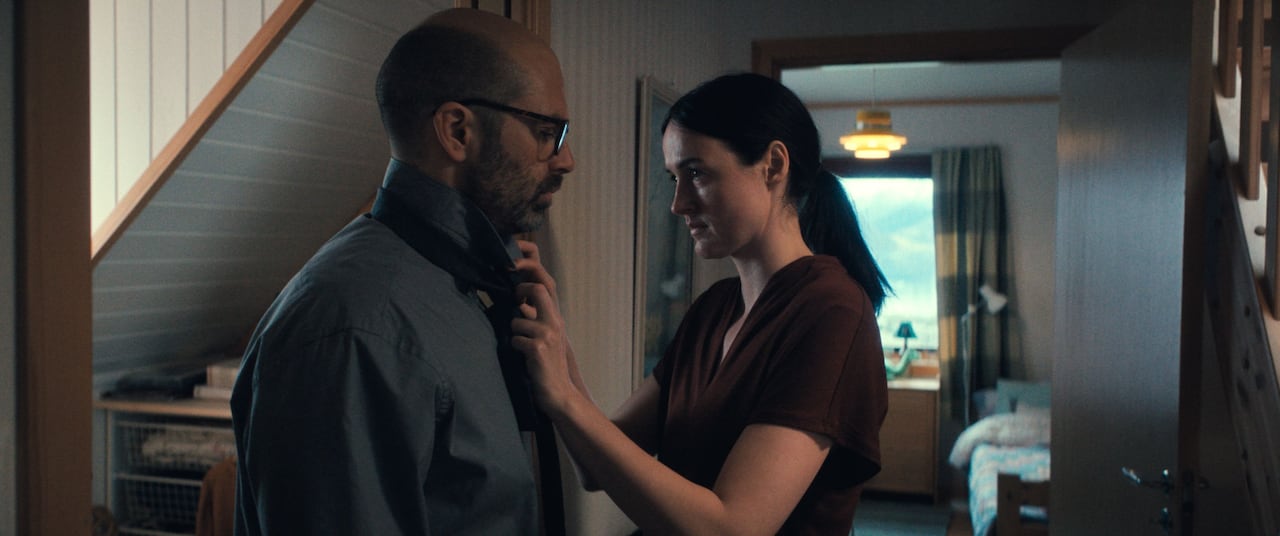
Sebastian Stan, left, appears next to Renate Reinsve in a scene from Fjord. (Elevation Pictures)
Of course, Sebastian, I’m not trying to downplay your versatility. You’ve portrayed complex characters that aren’t strictly villainous but also not flawless. How do you tackle the question of who is right, from a craft standpoint?
SS: Ultimately, it comes down to the filmmaker. This is a director’s medium. I’ve always perceived film this way. It becomes compelling when you encounter someone — through their vision and the themes they are exploring — who helps you discover more about yourself.
Life is intricate. People are multifaceted. We are capable of both good and bad actions. There are no absolutes. It’s challenging to find films that truly — particularly in the U.S., where I feel European cinema does this better — are unafraid to depict the complexities of situations.
People are not always the heroes we prefer to envision. They struggle to communicate their feelings effectively. They may lack the necessary tools. I think it will be engaging for the audience to do some introspection and try to determine their own feelings about the film.
And do you believe they will engage in that process?
SS: I do, which is why we continue to create these works.
CM: I hope so. Who can say? The goal is to convey that it’s acceptable to have films that provide all the answers by the end, perfect for a casual Friday night. However, cinema shouldn’t be confined to that format. There is room for a different kind of storytelling, and we aspire for this film to stimulate your critical thinking.
We don’t guide you by the hand to delineate good from bad. In life, no one does that for you. Life is complex. Cinema should reflect that complexity. Thus, as a viewer, you must put in the effort to grasp the film’s message and also reflect on your values. Ultimately, the film speaks to you and invites you to reconsider your beliefs periodically to ensure you are thinking independently.