

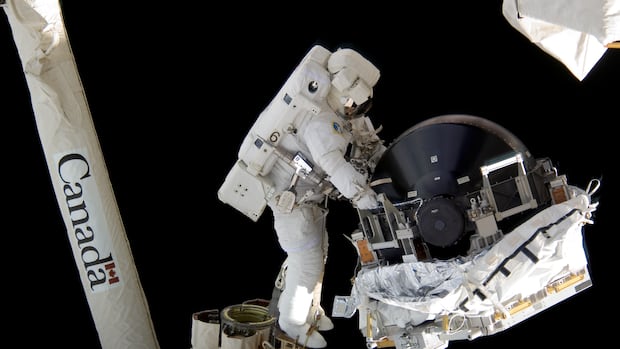

Orbiting approximately 400 kilometers above the planet, the International Space Station travels at a speed of around 7.66 kilometers per second. Today, astronaut Joshua Kutryk from the Canadian Space Agency is circling the Earth while engaged in work outside the station.
Kutryk, alongside NASA astronaut Anil Menon, is performing one of two planned spacewalks to install eight solar arrays. Following the second spacewalk scheduled for November 5, these additional arrays will enhance the station’s power output from 160 kilowatts to 215 kilowatts.
Canada is significantly involved in this spacewalk.
Jenni Gibbons, a CSA astronaut, is acting as the capcom, or capsule communicator, from the Johnson Space Center located in Houston.
She has previously taken on the capcom role several times, including during the Artemis II mission, where Canadian astronaut Jeremy Hansen orbited the moon with three NASA astronauts.
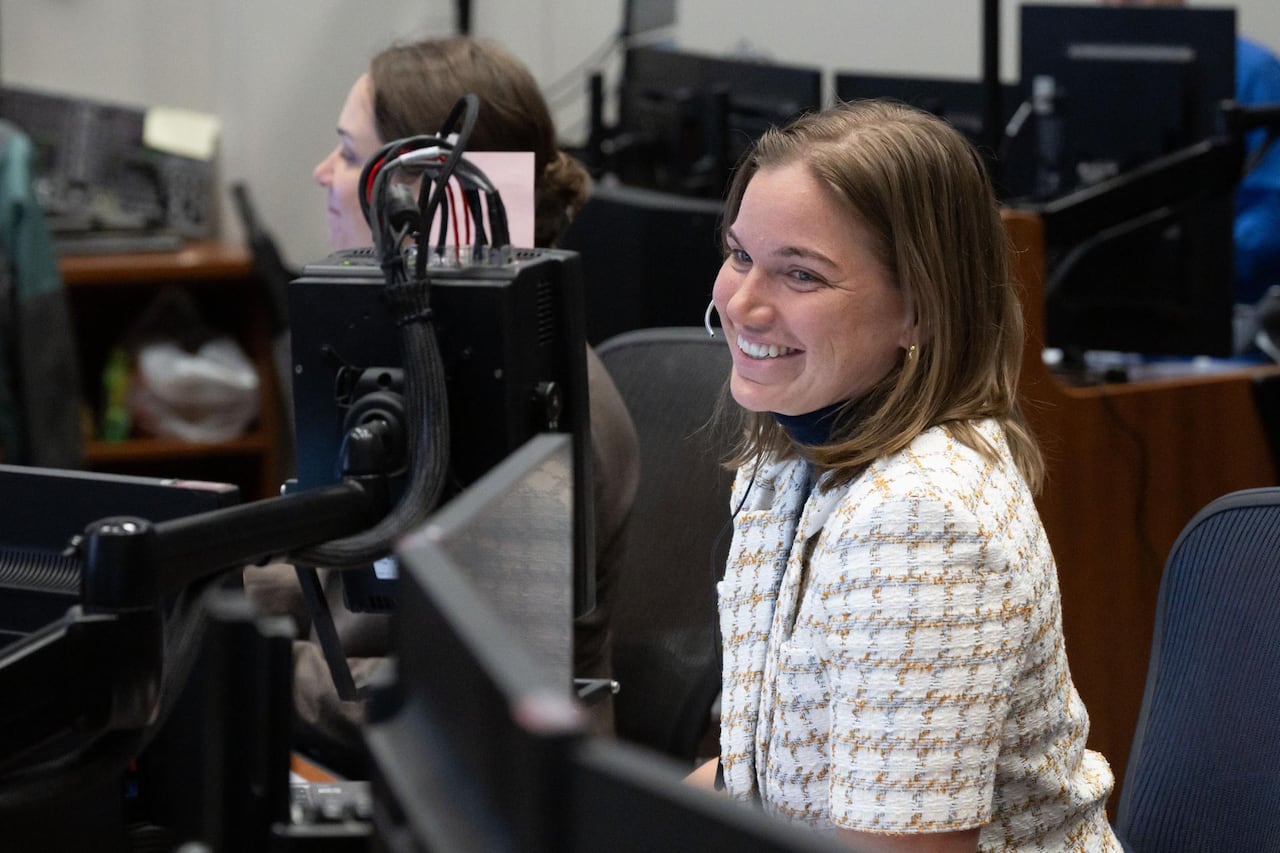
Jenni Gibbons, a Canadian Space Agency astronaut and backup Artemis II crew member, served as the capsule communicator (capcom) during an Orion manual piloting demonstration on the fourth day of the mission. (Bill Stafford/NASA)
Additionally, the Canadarm2, the robotic arm essential for the ISS’s construction, is utilized for transporting supplies and capturing cargo spacecraft.
It recently detached the arrays, known as the International Space Station Roll Out Solar Arrays (IROSAs), from a SpaceX Dragon cargo ship earlier last week and subsequently positioned them on the station’s mobile base.
-
Joshua Kutryk’s launch to the ISS is another example of the important role Canada plays in space exploration
-
Canadian astronaut Joshua Kutryk says he’s ‘having a blast’ on the International Space Station
Moreover, the CSA is actively participating from its Robotics Mission Control Centre in Longueuil, Quebec.
During Thursday’s spacewalk, Canadarm2 will assist Kutryk and Menon in retrieving and relocating each solar array from the mobile base to its designated location. Kutryk will not be using the arm; rather, Menon will be the one operating it.
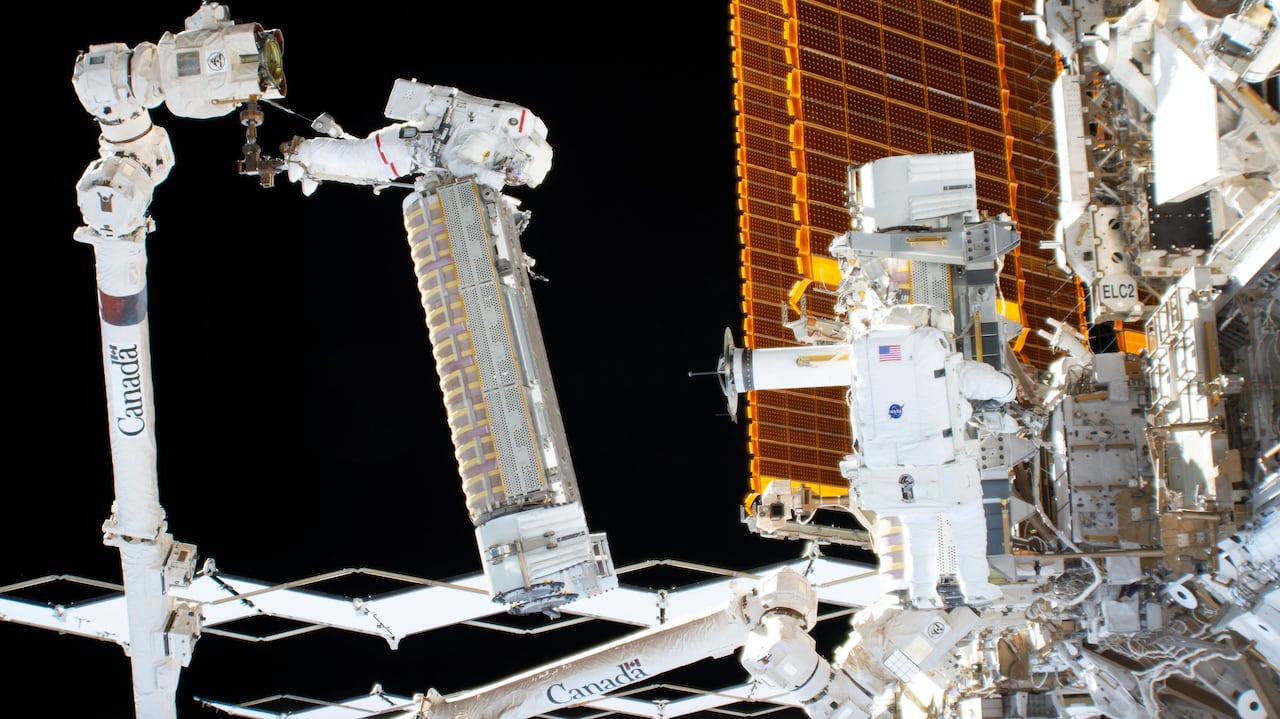
NASA astronauts conduct a spacewalk to install an International Space Station Roll Out Solar Array with the help of the Canadarm2 robotic arm in 2022. (NASA)
The entire spacewalk exemplifies Canada’s expertise in space, according to Mathieu Caron, director of CSA’s astronaut office.
He stated, “This signifies Canada’s acknowledgment of the significant role we play as part of this international collaboration,” emphasizing that roles involving spacewalks and capcom responsibilities are critical and not just assigned to anyone.
“It would be impossible to execute this spacewalk without the support of Canadian robotics.”
Not a walk in the park
“It’s incredibly hazardous, but we are thoroughly prepared,” remarked CSA astronaut David Saint-Jaques, who last performed a spacewalk in 2019.
“It’s a remarkable demonstration of teamwork. However, it’s an extraordinary experience to essentially be your own small satellite orbiting Earth.”
He also highlights that the spacesuit is far more than mere clothing.
“A spacesuit isn’t just an outfit; it’s not like a winter suit,” he explained. “It’s a compact spacecraft molded in the shape of a human body that you need to operate.”
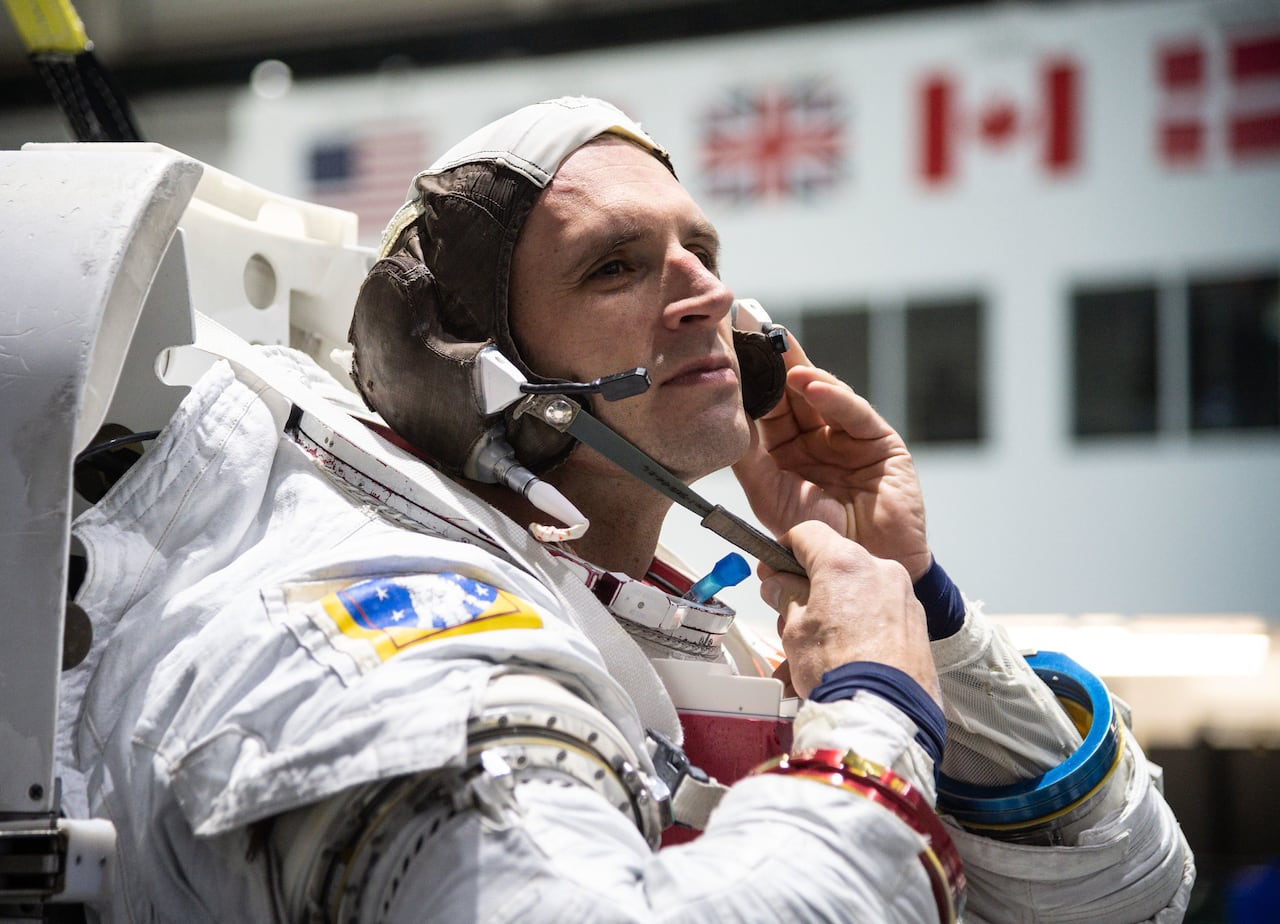
CSA astronaut Joshua Kutryk participates in a spacewalk training session at Johnson Space Center in Houston. (NASA)
A close call occurred in 2013 with European Space Agency astronaut Luca Parmitano during a spacewalk when water began to fill his helmet. He managed to return to the safety of the ISS soon after.
However, Kutryk has undergone extensive training for this spacewalk, and the crew completed suit checks over the past week.
Although the anticipated seven-hour spacewalk may be intimidating, Kutryk will have the chance to witness the world—and the universe—in a way that few individuals on Earth experience.
“For many astronauts, a spacewalk represents the pinnacle of their career,” Saint-Jaques mentioned, adding that just thinking about his own spacewalk sends chills down his spine.
He also shared a message for Kutryk: “Josh, I’m confident you’ll excel. You’ve got this.”
Saint-Jaques described Kutryk as a “stellar individual” who knows the procedures thoroughly, having practiced them multiple times. He noted that the main challenge will be “taking a moment to absorb the surroundings, gaze at Earth, and let it all resonate.”