

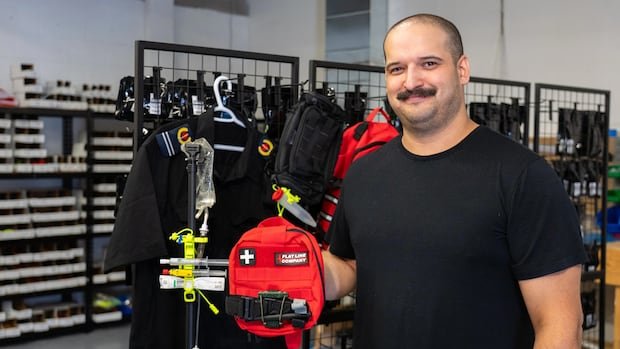

A recent imposition of tariffs by the United States on Canadian products has cast a shadow of uncertainty over the future of a burgeoning Ottawa enterprise, prompting it to seek alternative markets. Noah Marion, a paramedic, established Flat Line Company, specializing in crafting medical tools using 3D printing technology for healthcare professionals worldwide.
Following the collapse of the trade agreement between Canada and the U.S. over the weekend, Marion expressed concerns about losing a substantial portion of his American clientele due to the new tariffs. A 50% tariff on $28 billion worth of Canadian goods, including electronics, plastics, wood, paper, and dairy, took effect on Saturday.
Flat Line Company designs syringe and medical bag organizers, stethoscope holders, and other equipment aimed at facilitating the work of paramedics and medical staff. Despite the company’s recent move from Marion’s garage to a larger warehouse, the impact of losing American customers is significant.
With Canada set to retaliate with tariffs on U.S. goods from September 8, Marion is now focusing on attracting domestic clients, as well as expanding to markets in the United Kingdom and Australia. However, the urgency lies in adapting swiftly to offset the revenue loss and sustain business operations.
Prime Minister Mark Carney acknowledged the trade negotiations’ failure, emphasizing the priority of securing favorable deals for Canadians. Meanwhile, U.S. President Donald Trump hinted at imposing additional 50% tariffs on Canadian automotive and steel imports starting January 1, as per his social media post.
Ontario Premier Doug Ford announced measures to assist businesses impacted by the tariffs during a press conference in Hamilton, extending support to various sectors affected by the trade dispute. Ford emphasized the importance of unity among Canadian stakeholders in trade negotiations, calling for a cohesive approach to tackle challenges.
Ottawa Mayor Mark Sutcliffe revealed plans to introduce a motion to city council to safeguard local businesses, enhance the regional economy, promote local procurement, and foster job creation in response to the tariffs’ local repercussions.