

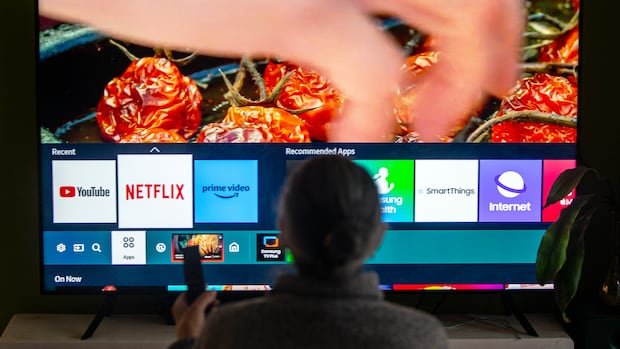

The trade dispute between Canada and the United States extends beyond traditional goods like dairy and car parts to include the regulation of content on streaming platforms like Netflix. According to a report by The Globe and Mail citing a senior government source, U.S. negotiators requested that Canada eliminate the requirement for American streaming services to promote Canadian content, including French-language content. Prime Minister Mark Carney emphasized that Canada refused to compromise on its sovereignty, language protection, and cultural values during the collapsed trade talks.
The conflict stems from a longstanding Canadian broadcasting regulation that mandates support for Canadian content, known as Cancon. However, with the rise of popular streaming services like Netflix and Amazon Prime, questions arose regarding the promotion of Cancon on these platforms. In response, the Canadian government introduced the Online Streaming Act in 2022 to update the Broadcasting Act and ensure online streamers contribute to Canadian content creation.
The legislation faced opposition from American streamers and digital media companies, leading to legal battles and disputes over funding obligations. The Canadian Radio-television and Telecommunications Commission (CRTC) mandated that online streaming services with revenues exceeding $25 million allocate a percentage of their Canadian revenue towards supporting local news, French-language, and Indigenous content.
However, major streaming companies challenged these requirements in court, prompting the CRTC to increase the contribution rate to 15% of revenues. This decision faced criticism from the Motion Picture Association (MPA), representing global streamers, who viewed it as unfair and a violation of trade agreements.
In response to concerns about potential price hikes, the Canadian government directed the CRTC to review the increase and announced plans to eliminate the contribution requirements entirely. Additionally, the government abolished the digital services tax in 2025 as part of trade negotiations with the U.S.
The ongoing dispute is not just about funding but also about regulating the distribution and promotion of Canadian content on streaming platforms. The government’s willingness to reconsider payment obligations while emphasizing the importance of Canadian cultural promotion signals a shift in cultural policy priorities.
The American government’s interest in these regulations, as seen in Quebec’s Bill 109, may stem from a historical strategy of promoting American content globally for cultural influence. The issue has become a focal point in trade negotiations between Canada and the U.S., reflecting broader cultural and economic implications.