

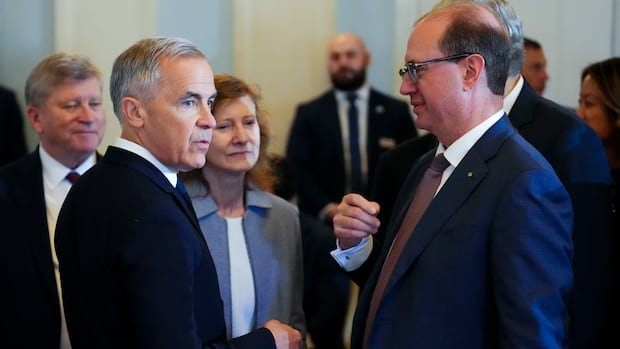

Canada’s envoy to the United States emphasized the necessity of reintroducing American alcohol to Canadian markets as a crucial step in finalizing a trade agreement and averting potential new tariffs, as reported by CBC News. Ambassador Mark Wiseman conveyed this message during a detailed briefing to approximately 100 members of the Canada-U.S. trade council, comprising various businesses, industry associations, and labor unions.
The ongoing negotiations in Washington involving Canada’s negotiating team aim to prevent the imposition of 50% tariffs on Canadian exports totaling billions of dollars before the looming Friday midnight deadline. Wiseman, in a 30-minute address, shared insights on a tentative consensus to sidestep the new tariffs, as per sources privy to the call. The sources, requesting anonymity due to confidentiality reasons, disclosed details to CBC News.
Wiseman disclosed that around 35 Canadian officials are actively engaged at the Canadian Embassy in Washington to finalize the draft of a potential agreement within 24 to 48 hours, according to sources. The proposed deal encompasses reductions in steel, aluminum, and auto tariffs, along with modifications to the allocation process for dairy import licenses by the government, potentially leading to increased American dairy products on Canadian shelves.
After Wiseman’s departure from the call, former Canadian chief trade negotiator Steve Verheul cautioned the council about potential pitfalls associated with the deal. Drawing from experience in negotiating the Canada-U.S.-Mexico Agreement and previous NAFTA talks, Verheul expressed apprehensions regarding the agreement, highlighting concerns about accepting sectoral tariffs and making substantial concessions.
The anticipated agreement is projected to see a decrease in U.S. steel and aluminum tariffs from 50% to 25%, along with a reduction in the tariff rate for Canadian-manufactured vehicles from 25% to 15%, with provisions for American content exemption. However, Canadian auto industry representatives expressed disappointment upon learning that their push for Canadian content exemption from American tariffs had not succeeded, indicating that this issue would be deferred to CUSMA negotiations.
Verheul underscored the risk of Canada relinquishing its bargaining power prematurely by making significant concessions, potentially leading to heightened demands from the U.S. He highlighted the widespread industry support in the U.S. for the continuation of CUSMA and duty-free trade, emphasizing the need for a strategic stance in negotiations.
Moreover, Verheul stressed the importance of Canada explicitly rejecting the U.S. sectoral tariffs and maintaining the goal of achieving duty-free trade within the upcoming CUSMA review. He also criticized the Canadian government for inadequate industry consultation and lack of detailed briefings for key stakeholders, contrasting the situation with the U.S. where industry representatives receive comprehensive information.
The council’s deliberations also featured insights from former finance minister Chrystia Freeland, who cautioned against agreeing to tariffs that could prove challenging to remove in the future, irrespective of changes in the U.S. administration. The discussions highlighted the intricate dynamics of the ongoing trade negotiations between Canada and the U.S., with a focus on critical areas such as alcohol regulations and tariff implications.