

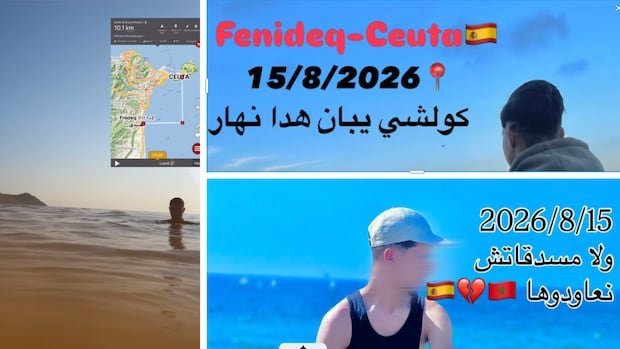

In the days leading up to a significant influx of migrants to Europe, a brief video shared on Instagram gained 1.4 million views. The video depicted a young man partially submerged in water, with a map indicating a sea route from Fnideq, Morocco, to Ceuta, a Spanish enclave in Africa. The post suggested successful arrival. This video was just one of many viral posts across platforms like Instagram and TikTok that seemed to rally multiple waves of irregular migration from Morocco to Ceuta. The most recent attempt on August 15 resulted in numerous arrests.
Various online communities, focusing on migration-related content such as music, memes, and imagery, shared these posts. Some of these communities appeared to exploit the aspirations of predominantly African and Middle Eastern youths seeking better opportunities abroad.
While there is debate among governments and organizations about the orchestrator behind the events in Ceuta, it is evident that misinformation, amplified through various online channels, played a significant role in driving the migration surge during the summer.
CBC’s visual investigations team, with support from Bellingcat’s Sebastian Vandermeersch, identified numerous social media accounts, mainly on Instagram, that were active before the initial wave on July 30. These posts, fueled by misinformation about a Spanish court ruling, led to a massive influx of over 72,000 individuals crossing the border, creating chaos in Ceuta and sparking a European political crisis.
Although the majority of those who crossed on July 30 have returned to Morocco, approximately 5,000 individuals remain in Ceuta, with some living on a beach aided by charitable organizations. Tragically, nearly 100 people lost their lives attempting the crossing.
The surge in social media activity, particularly on Instagram, was instrumental in shaping the events leading up to the mass crossings. The online content portrayed Ceuta as an attainable destination, generating a sense of possibility for migrants. This narrative, combined with desperation and misinformation, propelled individuals towards Ceuta, despite the risks involved.
Following Meta and TikTok’s agreement to fact-check posts to combat the spread of misinformation, a subsequent wave of posts emerged before August 15, signaling another opportunity for entry into Spain. Several accounts that were active during the July 30 crossing, along with new ones, were involved in mobilizing individuals for the August 15 attempt.
The response from Moroccan and Spanish authorities was swift, with thousands of police deployed to prevent further unauthorized entries. Authorities in Morocco reported the arrest of nearly 300 migrants on August 15. The government also took steps to address the dissemination of misleading social media content promoting illegal crossings.
The proliferation of online content offering guidance and encouragement for migrants highlights the complex interplay between digital platforms and real-world events. The allure of migration, fueled by a mix of genuine aspirations and dire circumstances, has made these messages resonate with a vulnerable audience seeking better prospects abroad.