

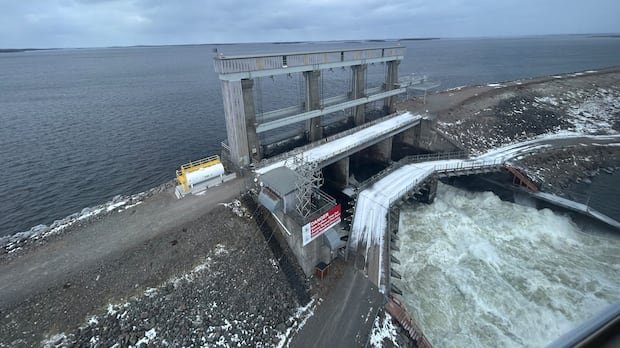

New insights have surfaced regarding a fresh agreement on Churchill Falls between Newfoundland and Labrador and Quebec, detailing plans to enhance energy production and distribution. Sources, not authorized to disclose information, confirmed to CBC News that a memorandum of understanding was nearing finalization between the provinces, with an official announcement likely to follow next week. As reported by Radio-Canada, insiders revealed that under the prospective deal, Quebec is set to receive a substantial increase of nearly 40% in electricity allocation, while Newfoundland and Labrador could see an augmented share of between 25% to 60%.
Quebec is expected to acquire approximately 10,000 MW, while Newfoundland and Labrador are slated to receive a minimum of 2,350 MW, potentially reaching up to 3,000 MW. Some specifics are still being ironed out. To achieve the boosted energy output, both sides have agreed to develop a more potent hydroelectric plant at Gull Island and enhance the turbine capacity at the existing Churchill Falls facility. The new agreement also encompasses wind power, a component absent from the prior 2024 MOU.
Minister Lela Evans, addressing reporters, remained discreet about the new MOU’s specifics. When questioned about the potential need for a referendum on the revised deal, Evans sidestepped the query, highlighting the initiatives undertaken by the governing party and the economic benefits anticipated for residents. Labrador City Mayor Jordan Brown emphasized the significance of the updated agreement in bolstering energy production and averting economic downturns in the region.
The revised deal, as initially reported and corroborated, secures transmission access of 985 megawatts through Quebec, enabling Newfoundland and Labrador to sell Churchill River electricity through Quebec’s network to external markets. Brown lauded this provision, citing numerous projects in Labrador that could leverage the surplus power. While precise terms of the MOU are undisclosed, Brown expressed a desire for federal support in construction endeavors, notably for a crucial third transmission line.
Consultant Gabe Gregory, who contributed to an in-depth review of the 2024 MOU, highlighted the potential market access as a substantial development, cautioning against premature excitement pending official confirmation. He advocated for an independent review of the new agreement and stressed the importance of honoring commitments for public consultation on resource development decisions. Ben Oates, chair of Friends of Renewable Churchill Energy, acknowledged the similarities between the new and previous MOUs, emphasizing the need for fair value in power transactions.
The upcoming Quebec election, with implications for the deal’s stability, was also highlighted by Oates. As discussions on the finalized terms unfold, stakeholders await further details to assess the true impact of the revised Churchill Falls agreement.