

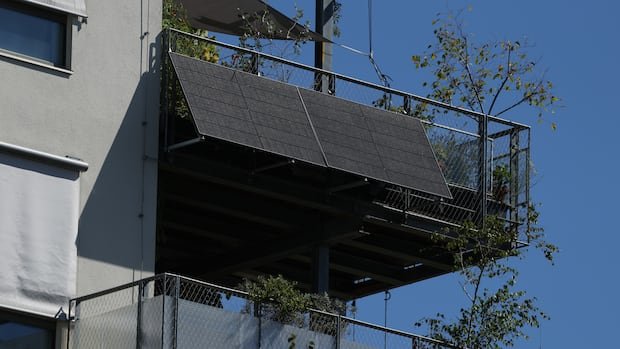

Amid a significant 34% increase in electricity rates, the Yukon Conservation Society is urging Yukon residents to consider taking control of their energy production. The non-profit organization recently utilized social media to promote the use of plug-in solar panels, a technology gaining popularity due to escalating energy expenses. Although plug-in solar panels are not yet legal in Canada due to the absence of formal standards and hesitation from provinces, territories, and utilities.
Sebastian Jones, an analyst specializing in fish, wildlife, and habitat with the Yukon Conservation Society, highlighted the frustration felt by many individuals over rising utility bills and the indefinite pause of the microgeneration program by the Yukon government. He suggested that individuals could set up plug-in solar panels by connecting them to a dedicated circuit without the need for complex installations.
The issuance of permits for connecting home solar panels was halted in 2023 by the territory after these devices began causing disruptions to the electrical grid. According to Jones, Yukon Energy faced challenges managing rapid fluctuations in solar energy caused by weather changes, affecting grid operations beyond a certain threshold.
Wayne Potoroka, a spokesperson for the Yukon’s Community Services department, emphasized that using uncertified electrical equipment like plug-in solar panels is illegal in Canada. Yukon Energy refrained from taking a stance on plug-in solar due to its non-permitted status.
John Maissen, a former senior engineer at Yukon Energy, expressed concerns about potential electrical hazards and circuit problems if individuals were to directly plug solar systems into home outlets. However, he remained optimistic about the future of renewable energy in the region, suggesting that incorporating batteries could help manage energy fluctuations associated with solar power.
A grid-scale battery project is currently in progress, with Yukon Energy reporting that the Whitehorse battery project is nearing completion. Jones, inspired by Germany’s “guerrilla solar” movement, is advocating for swift adaptation by the government to accommodate multiple distributed energy sources on the Yukon grid.
The concept of “balcony solar” originated in Germany, where a movement promoted the use of plug-in panels to reduce energy costs for renters without roof access. This approach has garnered interest globally, with Utah becoming the first U.S. state to legalize plug-in solar, signaling a shift towards solar power.
Advocates like Joe Vipond from the Calgary Climate Hub are pushing for the adoption of plug-in solar in Canada to enable broader participation in the energy transition. While acknowledging the global momentum around balcony solar, Vipond emphasized the importance of ensuring that legal frameworks align with safety standards. He highlighted the need for lawmakers and utilities to catch up with public sentiment while acknowledging the growing enthusiasm for this technology.