

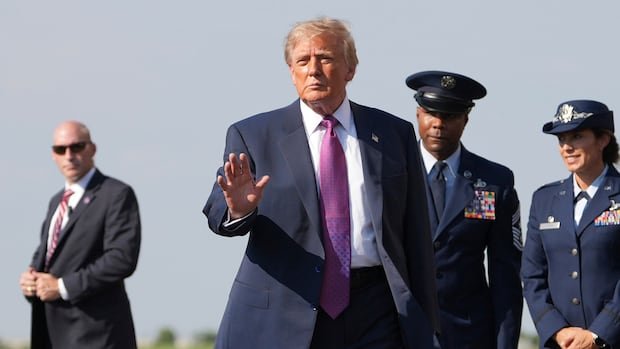

A group of U.S. legislators have urged Donald Trump to put an end to the conflict with Iran, which has now entered its sixth month. Despite conflicting signals from the U.S. president, Trump claimed that the military’s offensive strikes and the blockade of the Strait of Hormuz have been instrumental in achieving U.S. goals. In a social media post, he declared “MISSION ACCOMPLISHED 2026” with AI-generated images featuring the late Iranian supreme leader Ayatollah Ali Khamenei’s face.
Diplomatic exchanges between Tehran and Washington have been limited, with third parties handling negotiations, while Trump seemed more focused on trade tensions with Canada this week. It is anticipated that Trump will shift his focus towards the upcoming Nov. 3 midterms, where he has been actively working to influence voting patterns and is preparing for a unique Republican mini-convention in two weeks.
Representative Adam Smith from Washington, the leading Democrat on the House Armed Services Committees, highlighted the toll of the war, emphasizing the sacrifices made by military personnel. Smith pointed out that the conflict has resulted in the loss of 19 American service members, over 750 wounded, and numerous civilian casualties, along with a significant financial burden on taxpayers.
The U.S. and Israel have targeted key Iranian figures, resulting in a leadership vacuum and economic challenges for Iran. Rising food prices, fuel shortages, and a sharp decline in Iran’s GDP have added to the strain. The war has also taken a toll on the U.S., impacting Trump’s approval ratings, fuel prices, and international relations.
Brett Bruen, a former U.S. diplomat, criticized Trump for escalating costs and instability globally. Iran responded to U.S. strikes with drone attacks and mining operations in the Strait of Hormuz, disrupting oil and gas shipments. Despite Trump’s claims that the strait remains open, ship-tracking data indicates a significant decrease in traffic.
Calls for transparency regarding the war’s expenses have been made by Democrats, with Defense Secretary Pete Hegseth estimating a cost of $37.5 billion but facing criticism for potential underestimation. While few Republicans oppose the war, some have raised concerns about military tactics and the administration’s adherence to the War Powers Act.
Trump’s recent statement indicated a lack of urgency in returning to negotiations with Iran, favoring economic pressure tactics. Reports suggest that diplomatic personnel will be reintroduced to select Middle Eastern missions, signaling a potential shift in strategy. However, the outlook remains uncertain, with concerns about the prolonged nature of the conflict and its impact on the region’s stability.