

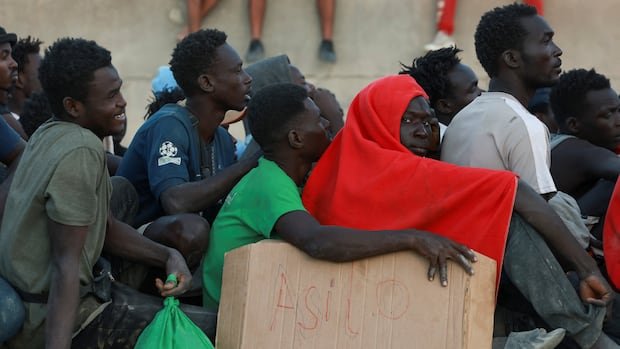

Spain’s Interior Minister, Fernando Grande-Marlaska, provided an updated count of the migrants who entered Ceuta last week, while European Union ministers addressed the situation on Tuesday. Grande-Marlaska stated that approximately 72,000 individuals arrived at the Spanish border last week, with 70,000 having returned to Morocco since then. However, local official Alejandro Ramírez mentioned that pinpointing the exact number was challenging but estimated that around 3,000 to 5,000 migrants remained in the city.
The Spanish government announced a funding of 25 million euros ($40.5 million Cdn) to aid the minors in Ceuta. Additionally, the Spain Civil Guard revealed the establishment of a missing persons office at the customs house on the border, along with an email address for submitting missing persons reports.
Spanish authorities noted that many migrants voluntarily went back upon realizing the difficulties in reaching mainland Europe or the limited capacity of the small enclave to accommodate them. Among the migrant population remaining in Ceuta are individuals from various countries such as Sudan, Palestine, Afghanistan, and other African nations.
It is estimated that roughly 1,000 minors, including some of the most vulnerable border crossers, are still in Ceuta, separated from their families in an unfamiliar place. Tragic incidents, like the story of a 17-year-old girl who witnessed her brother drown during a chaotic border crossing, highlight the harrowing experiences faced by these migrants.
The Spanish law allows adult migrants to seek asylum, with stringent criteria for humanitarian protection. Unaccompanied migrant minors, on the other hand, are supposed to receive protection and care from Spanish authorities. Grande-Marlaska emphasized the respect for the fundamental rights of vulnerable individuals in Spain.
Moreover, Grande-Marlaska confirmed that the death toll had risen to 75, mainly from drownings during the crossing. Ceuta officials had warned the Spanish government about the increasing arrivals before the crisis unfolded. Meanwhile, on the Moroccan side of the border, families anxiously awaited news of their loved ones who had crossed over.
The surge in migrant arrivals prompted EU ministers to discuss strategies for better intelligence sharing, early detection of migration surges through social media monitoring, and bolstering protection of the EU’s external borders. Denmark and Italy advocated for stricter migration measures during the emergency talks, emphasizing the need to prevent a recurrence of the 2015 crisis.
Migration remains a contentious issue within the EU, with a history of significant challenges, particularly following the 2015-16 refugee influx. While irregular border crossings had decreased substantially since 2017, there was a resurgence amid the pandemic, with an estimated 316,000 irregular crossings reported. Frontex, the European Border and Coast Guard Agency, documented notable declines in irregular crossings in previous years.