

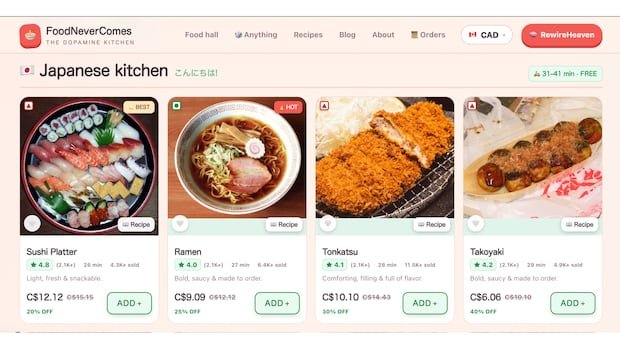

The fascination with counterfeit online shopping destinations has been on the rise, enticing individuals with the experience of making purchases without the financial consequences. Originating in South Korea, simulated shopping platforms have gained popularity among younger, budget-conscious consumers aiming to control impulsive spending habits.
These mock shopping websites, like DopamineCart and FakeEats, replicate the typical online shopping process without actual deliveries. For instance, FoodNeverComes, a fictitious food delivery site, has garnered approximately 92,000 active users within the last three months. Users can select meals, simulate checkouts, and track virtual deliveries.
Anshul Sharma and Purvansh Parmar, the creators of FoodNeverComes, based in Udaipur, India, highlight the site’s aim to help users reflect on their online shopping patterns. Sharma noted that the largest user base hails from the U.S., with China, the U.K., Vietnam, and Canada following suit.
Rhia Catapano, a University of Toronto assistant professor specializing in consumer behavior, underscores that online shopping simulators can trigger similar brain responses as actual shopping. While these sites may assist users in refraining from unnecessary purchases, caution is advised regarding personal data security.
To combat overconsumption, platforms like Imaginair integrate environmental messaging into their virtual shopping experiences. Earth Day Canada’s campaign on the site attracted 30,000 visitors, emphasizing the environmental impact of excessive online shopping practices and advocating for sustainable consumption habits.
As consumerism continues to permeate society, these mock shopping sites serve as a mirror, prompting individuals to reevaluate their consumption behaviors and make more mindful choices. This shift reflects a growing awareness of the negative implications of rampant consumerism and a desire to break free from compulsive spending habits.