


A researcher is investigating the impact of an invasive insect and the pesticides used to combat it on the species residing in ancient hemlock forests. Over the past decade, the hemlock woolly adelgid (HWA) has been causing significant damage to forests in southwestern Nova Scotia. In response, various entities such as Parks Canada, the province, local groups, and private landowners have been employing insecticides like imidacloprid and dinotefuran to control the spread of the pest.
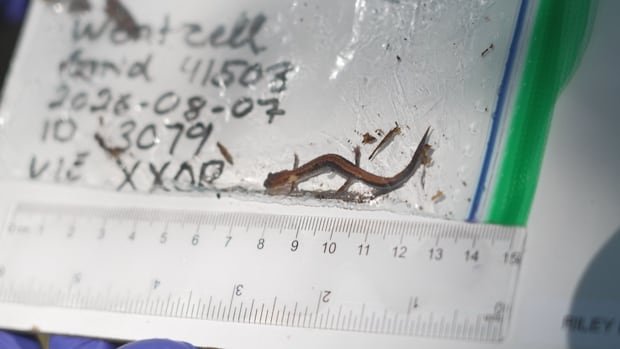
Mathilde Christjansen, a master’s student at Mount Allison University in Sackville, N.B., highlighted the lack of knowledge regarding how the woolly adelgid and the insecticides might be impacting other species. Christjansen emphasized the potential neurological effects of imidacloprid on various animals, not just insects. To gain insights into the overall ecosystem, the research team is focusing on the eastern red-backed salamander as a bioindicator species due to its sensitivity to environmental changes and pollutants.
Using coverboards placed in forests last year, scientists monitored salamanders to assess their populations, behavior, and health. Some forests are treated with insecticides, while others are left untreated. The team conducted behavioral tests on the salamanders, observing their responses to stimuli like light poking and being flipped upside down. The project aims to determine if salamander populations in treated or untreated forests show any signs of stress or health issues, which could indicate broader ecosystem impacts.
The study also examines how the decline of hemlock trees, caused by HWA infestation, affects salamanders. Chris Edge, a scientist with the Canadian Forest Service, explained that dying hemlocks alter the forest habitat, potentially leading to drier conditions that could impact salamander populations due to their sensitive skin and moisture requirements.
This collaborative project involves researchers from Mount Allison University, Canadian Forest Service, Acadia University, Environment and Climate Change Canada, and the University of Saskatchewan. It is part of a larger initiative focusing on forest health in Eastern Canada. Christjansen plans to continue her study until next year, analyzing the data and videos collected during the summer fieldwork.