

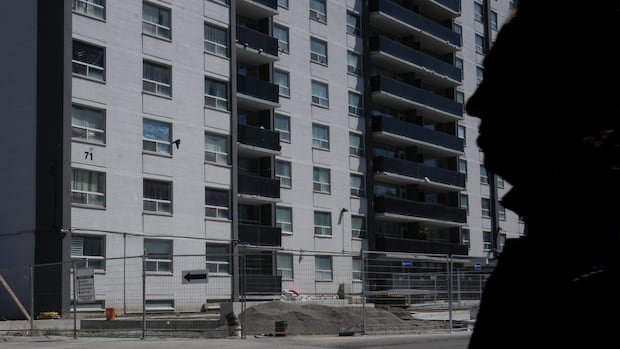

Buying a property is often the most significant financial decision for many Canadians. It represents a substantial investment and a major financial commitment. The question arises: Is it more financially advantageous to make a substantial down payment when purchasing a property, resulting in higher monthly expenses, or to continue renting and invest the savings elsewhere? The ultimate goal is to determine which option leaves more money in your pocket in the long run.
To address this dilemma, an extensive analysis was conducted using over 20 years of historical data on property prices, rents, inflation rates, and interest rates in 22 Canadian cities, in conjunction with long-term stock market performance. This analysis led to the development of an interactive simulator. Each simulation calculates the monthly expenses and financial gains for three distinct scenarios: a homeowner with a fixed-rate mortgage, one with a variable-rate mortgage, and a renter. In cases where the renter’s monthly expenses are lower than the homeowner’s, the saved funds are automatically invested in stocks and bonds to generate compounded returns over time.
The simulator forecasts these financial scenarios over a 25-year period across 1,000 unique situations, encompassing varying factors such as high rents with low interest rates or average inflation coupled with subdued stock market returns. The calculations consider mortgage payments, insurance, property taxes, maintenance costs, condo fees, rent, and eventual selling expenses. Each outcome represents a potential future based on historical trends and selected options.
While the tool provides probabilities rather than certainties and should not be the sole basis for significant financial decisions, it offers valuable insights. The simplified simulator presented here can be further explored for an in-depth analysis with expanded options and detailed methodology breakdown.
Recent trends show a decline in home prices over the past few years, alongside rising interest rates, average property taxes, and maintenance expenditures. Contrastingly, the stock market has experienced notable growth. Investments made in stocks in 2005 have shown significantly higher returns compared to properties bought during the same period.
Analysis indicates a consistent trend: Opting to rent an average studio or one-bedroom apartment and investing the saved funds can lead to substantial financial gains. However, transitioning to a two-bedroom apartment or larger can quickly alter the financial equation, as higher rent costs often absorb any surplus, making it challenging to save and invest effectively.
In many instances, monthly rental expenses eventually surpass the costs of ownership. While a homeowner’s primary monthly expenditure is the mortgage, which tends to decrease in real terms over time due to inflation adjustments, rental costs typically escalate, often exceeding general inflation rates. This shift leads renters to pay more monthly compared to homeowners, limiting savings and investment opportunities.
Location plays a crucial role in determining the financial implications of owning versus renting. In certain areas, owning a condominium results in minimal financial loss after factoring in all expenses, in contrast to renting a larger two-bedroom apartment or more. While buying and selling a condo does not guarantee profits, single-family homes or townhouses offer higher chances of financial returns, albeit with a higher initial purchase price.
For many Canadians, particularly those in urban centers, renting is the only viable housing option due to affordability constraints. The housing landscape presents dual challenges: one related to the middle-class affordability crisis in acquiring properties in major cities, and the other concerning low-income individuals struggling to secure adequate housing.
The delay in property ownership seen among younger generations can have long-term repercussions on wealth accumulation. Factors like recession timing, housing market conditions, and personal life stages significantly influence investment outcomes. Ultimately, the decision to buy or rent should not solely rely on financial calculations but also consider personal circumstances and long-term life goals.
In conclusion, the debate between buying and renting homes in Canada underscores the need for a balanced approach to housing policies. Emphasizing both homeownership and rental options while ensuring affordability and supply equilibrium is crucial. Public policies should aim to stimulate construction while maintaining housing affordability for all segments of the population.