


Plant enthusiast Klaus Koehler made a rare discovery in July while exploring the Sylvia Grinnell Territorial Park near Iqaluit. He stumbled upon a plant species seldom seen in the Arctic, suggesting potential implications for invasive species in Northern habitats due to climate change.
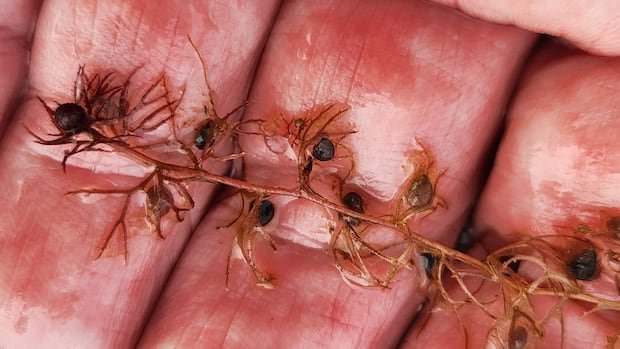
Koehler found a peculiar brownish weed-like plant known as bladderwort in a pond within the park. Despite its inconspicuous appearance to the untrained eye, Koehler recognized the plant’s unique features upon closer inspection.
This carnivorous plant is adorned with small black bladders containing partially digested flies. Typically found in more southern regions, bladderwort rarely ventures into the tundra environment. The only prior documentation of this plant in the area dates back to 2012, when researchers discovered samples outside Kimmirut, approximately 120 kilometers southwest of Iqaluit.
During a series of Arctic expeditions, a team of scientists identified over 30 new plant species in the region, shedding light on the changing flora distribution as the Arctic warms. Koehler believes this discovery may signal a shifting climate trend, leading to the emergence of plant species not traditionally found in the Arctic due to milder conditions.
The introduction of these non-native species poses a threat to the Arctic ecosystem, potentially altering the balance of native flora. Concerns about invasive species spreading into the region are shared by experts like Paul Sokoloff from Ottawa’s Museum of Nature, who participated in the 2012 study that documented bladderwort in the Arctic.
Various factors, including bird migration, maritime traffic, and human activities, contribute to the transportation of plant seeds into Arctic regions. Sokoloff emphasizes the importance of monitoring and managing invasive species to prevent them from outcompeting indigenous plants, citing the detrimental impact of invasive grass phragmites in Ontario ecosystems.
While Koehler’s discovery is unlikely to have significant immediate consequences, the potential invasion of over 2,500 plant species into the Arctic raises concerns among scientists. The ongoing research aims to anticipate and address the ecological changes prompted by climate shifts, with Koehler planning to contribute valuable data by sending a sample of the Iqaluit bladderwort to the Museum of Nature for further analysis.