

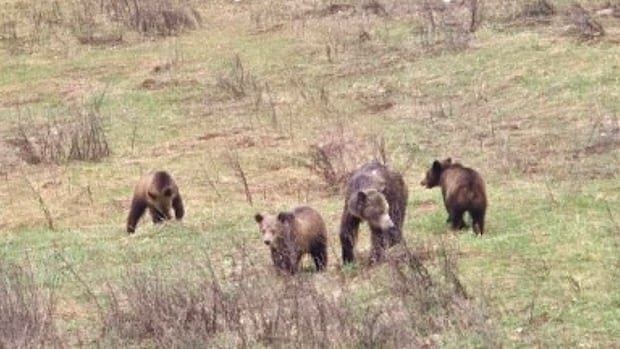

Hundreds of people gathered in Nelson, B.C., on Thursday to demonstrate against the B.C. Conservation Officer Service’s choice to euthanize a young grizzly bear. The bear was part of a group of grizzlies that have become well-known in and around Nelson. Katie Graves, the founder of the Ursa Project Society, expressed that there was a mix of emotions at the rally, including tears and hugs.
According to Graves, the young grizzly, which had a leg injury or deformity, should not have been put down. She highlighted that the bear was still mobile, stayed with its family, and could feed itself. Graves mentioned that despite the leg issue, the bear was able to keep up with its family, showcasing resilience similar to other bears known as “tripods” that lead full lives.
The B.C. Conservation Officer Service defended its decision by stating that the bear’s age, injury, and previous conflicts made it unsuitable for rehabilitation or relocation. The service emphasized that the decision to euthanize the bear was not taken lightly, acknowledging the unfortunate nature of such situations.
The incident has sparked significant public outcry on social media platforms, with many community members criticizing the decision to kill the bear. While acknowledging the importance of public safety, some individuals stressed the need for better garbage management practices to prevent attracting bears to urban areas.
Wildlife biologist Clayton Lamb emphasized the necessity of stricter policies to minimize attractants and prevent bear-human conflicts. He highlighted the challenges of rehabilitating habituated bears, especially those comfortable in urban settings. Lamb underscored the importance of managing attractants to deter grizzly bear families from venturing into towns in the future.
The City of Nelson released a statement outlining their efforts to mitigate conflicts and preserve the wild nature of bears. Initiatives include assisting residents in installing bear-resistant garbage cans, conducting public education programs, and enforcing waste management bylaws to ensure compliance with wildlife attractant regulations.