

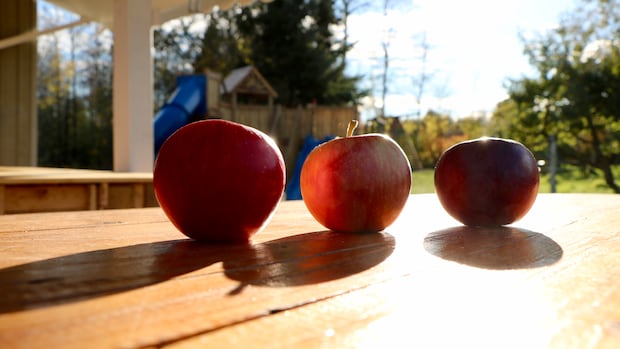

The Orléans apple, cultivated on Île d’Orléans in Quebec, is set to appear in grocery stores this autumn after nearly 25 years of development.
The journey began in 2002, when growers selectively gathered pollen from Honeycrisp and Empire apple blossoms, dedicating years to crossbreeding these varieties until they achieved the vibrant red and crunchy Orléans apple. Although this apple has been available in Quebec orchards for approximately two years, it is just now making its way to retail shelves.
“I have clients specifically requesting this variety,” states Karen Morin. She believes it has the potential to be “the apple of the future.”
Morin, co-owner of Verger du Roy in Portneuf, cultivates 57 different apple varieties, but she notes that the Orléans is becoming increasingly popular among apple pickers this year.
“It’s a combination of Honeycrisp and Empire, which together create an exceptional flavor. It’s incredibly sweet and maintains a delightful crispness,” Morin explains. “In the future, our children might find that the Orléans surpasses Honeycrisp as the favorite apple.”
Morin points out that while apple preferences may shift over generations, consumers consistently seek apples that retain their crispness longer. She believes this factor contributes to the rising popularity of the Orléans apple.
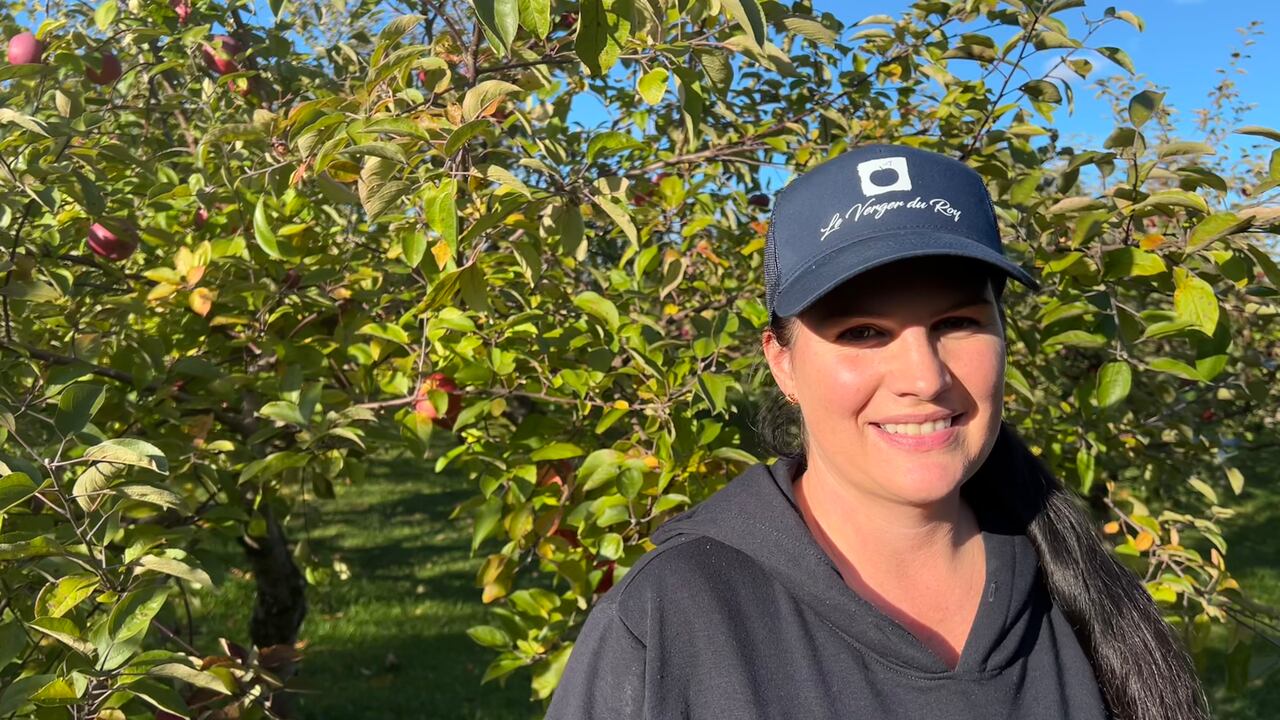
According to Karen Morin, the Orléans apple has seen a rise in popularity among apple pickers in the past two years; however, many people remain unaware of the latest apple varieties entering the market. (Sarah-Kate Dallaire/CBC)
“It ranks highly for firmness and is almost at the top for sugar content,” remarks Benoit Caron, owner of La Maison de la Pomme. Caron planted 20,000 Orléans trees at his orchard in Frelighsburg about five years prior.
“While it’s not the first apple created in Quebec, it’s the first that can be available for at least 10 months a year due to its excellent storage qualities,” Caron adds.
He emphasizes that this variety serves well as a snack, “but it’s also an excellent choice for cooking. It holds its shape well, so for dishes like apple custard or apple pie, you’ll have nice, intact slices.”
Increased Supply and Demand for Quebec Produce
Jérôme-Antoine Brunelle, executive director of the Producteurs de pommes du Québec, highlights the significance of introducing new varieties to cater to diverse consumer preferences, noting the recent surge in demand for Quebec-grown produce.
“If these new varieties can help us capture market share from imported apples and increase the availability of Quebec-grown apples to consumers, it’s beneficial for everyone,” he states.
Brunelle acknowledges that recent tensions with the U.S. and tariff issues have influenced consumer behavior. “People have shown more interest in locally sourced food,” he notes, with apples being no exception.
Interest in locally sourced apples has increased over the past two years, “and it appears to be continuing,” asserts Jérôme-Antoine Brunelle, executive director of the Producteurs de pommes du Québec. (Sarah-Kate Dallaire/CBC)
“This growing interest in locally sourced fruit is beneficial for us, and we observe that Quebec consumers are becoming more conscious of the origins of their food,” Brunelle adds.
However, he emphasizes that producers and grocery stores need to ensure that Quebec apples are distinctly labeled in produce sections to attract more consumers.
Diverse Regions, Varieties, and Ciders
Claude Jolicoeur, an author with three publications on apples and cider production, aims to expand the variety of apples cultivated in Quebec, particularly for cider-making. “Ultimately, I hope we can establish a ‘regional cider’ designation,” he expresses.
Jolicoeur believes this could elevate Quebec’s cider production to levels comparable to wine production in Italy, where different grape varieties from various regions yield distinct wines with unique flavors.
For example, Morin notes that Quebec apples can evoke flavors reminiscent of other fruits such as bananas, pineapples, strawberries, and even chestnuts.
“You can compare apples to apples, but they are still distinct,” she remarks.
Nonetheless, the apples used for cider differ from those harvested in orchards or purchased from grocery stores. “When selling apples in a grocery store, they must be aesthetically pleasing,” Jolicoeur explains.
In the context of cider, however, he points out that “the appearance of the apple is irrelevant because it won’t be seen.”
Jolicoeur hopes that in the future, more Quebec apple varieties will be cultivated by cider and apple producers.
In the meantime, producers stress that several apple varieties, including the newly introduced Orléans, are available throughout the year, not just in the fall.