

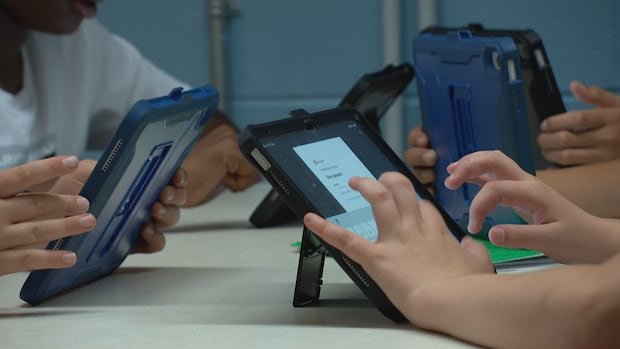

In a middle school in Moncton this week, students engaged in an immersive digital challenge, attempting to escape a virtual dungeon inhabited by a dragon while delving into cybersecurity concepts. Following this, some students transitioned to creating visual presentations, while others navigated interactive screens to explore a unit on food. Additionally, a group of students worked on programming small robots. Artificial intelligence tools were integrated into these activities, overseen by their Grade 7 teacher.
The Anglophone East School District has been progressively incorporating AI into its classrooms over the past few years. Now, more schools in New Brunswick are following suit, following the Department of Education’s inclusion of AI education in the updated anglophone K-12 curriculum.
Amid global concerns and regulations on AI in education, New Brunswick’s approach to integrating AI into the curriculum has been described as a methodical expansion of digital literacy to include structured AI education. This initiative aims to equip students with the necessary skills to critically engage with technology. Jordan Smith, the tech, innovation, and AI subject coordinator at Anglophone East, emphasized the importance of age-appropriate AI education and fostering a critical mindset towards technology.
The curriculum begins by introducing basic digital literacy concepts to students in kindergarten through Grade 2, gradually advancing to hands-on digital device experiences in higher grades. However, primary students are not engaging with AI chatbots. The use of AI tools in schools is governed by platform age restrictions, ensuring compliance with privacy and safety guidelines.
Educators are receiving comprehensive training on integrating AI into the curriculum, with ongoing professional development sessions and support from tech coaches. The province has also released AI learning modules for teachers. Education Minister Claire Johnson highlighted the safe and ethical use of AI in schools and the development of AI literacy in the updated curriculum.
The integration of AI into schools is viewed as a collaborative endeavor between schools and families, according to Randolph MacLean, the Superintendent of Anglophone East. While acknowledging the complexities of this integration, he emphasized the importance of thoughtful implementation of new technologies and curricula.
In response to renewed parental concerns over technology in classrooms, particularly regarding AI, some advocates are calling for a cautious approach. Parents, like Ben Humphreys, are questioning the rapid introduction of AI in schools and advocating for a pause to assess its potential impacts on student development and learning.
As discussions around AI in education continue, there is a growing need for clear policies and guidance. A recent survey by KPMG Canada revealed a gap in responsible AI use education between students and educators, underscoring the necessity for standardized guidelines and support in navigating AI integration in educational settings.
In conclusion, the incorporation of AI into education is a transformative process that requires collaboration, thoughtful planning, and ongoing evaluation at both the provincial and national levels. Addressing the challenges and opportunities presented by AI in education demands a comprehensive and strategic approach to ensure the well-being and educational growth of students.