

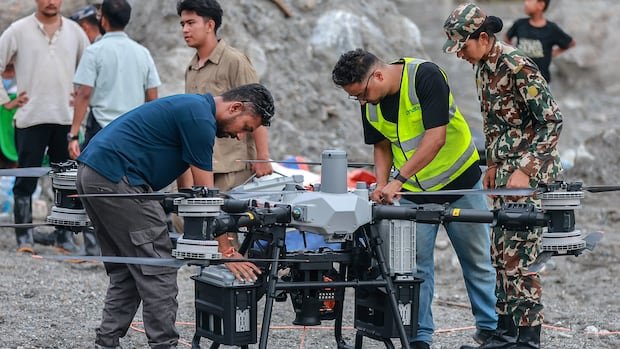

In the aftermath of devastating floods in Nepal last month that led to the destruction of infrastructure and ongoing search and rescue efforts, the Nepal army has turned to drones for relief operations. The natural disaster, triggered by a Himalayan glacier breaking off near the Nepal-China border in late August, has resulted in at least 1,367 confirmed deaths and over 5,000 people reported missing.
With helicopters primarily focused on rescue missions, drones have emerged as a crucial means of delivering essential supplies like food, medicine, and fuel to displaced individuals. Santosh Budhathoki, a contracted drone pilot for the Nepal army, emphasized the significance of prioritizing drone usage due to their efficiency in reaching areas inaccessible by other means.
Capable of transporting up to 60 kilograms over distances of three to four kilometers, drones have already started making a tangible impact by aiding communities in urgent need. The army is currently conducting 10 to 16 aid deliveries daily using a fleet of four DJI FlyCart 100 drones, generously donated by China as part of relief efforts.
Apart from delivering aid, drones have been instrumental in transporting the bodies of flood victims and conducting reconnaissance missions to support search and rescue operations in affected regions. Milan Pandey from Airlift Technology highlighted the advantage of utilizing drones in Nepal’s challenging terrain, emphasizing their speed, efficiency, and cost-effectiveness.
As drone operators work tirelessly to navigate the demanding landscape, these unmanned aerial vehicles have proven to be essential tools in the ongoing relief efforts following the catastrophic floods in Nepal.
[Image credits: Images courtesy of respective photographers/owners.]