

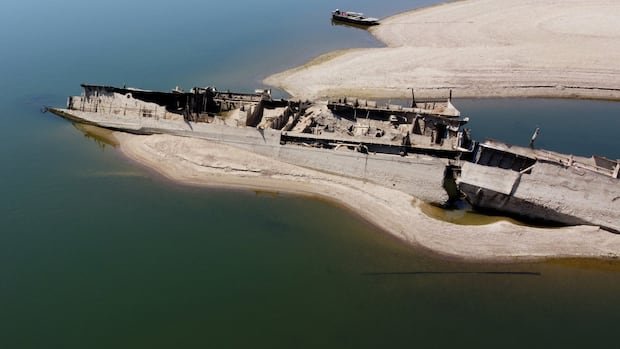

Nazi German warships deliberately sunk in the Danube River during World War II are resurfacing due to dropping water levels, illustrating the severe heat and drought affecting Europe this summer. Western Europe is bracing for a fifth heatwave since May, with temperatures nearing 40 degrees Celsius in Spain, France, and Italy. The Copernicus climate monitoring service confirmed that June and July were the hottest on record in western Europe, resulting in an estimated 25,000 heat-related deaths.
The scorching heat has led to devastating wildfires and record-low water levels in essential water bodies like the Danube. Climate scientists warn that these resurfacing wrecks are a visible indication of the worsening impacts of fossil fuel-induced climate change, intensifying heatwaves, droughts, wildfires, and affecting various sectors in Europe.
The exposed warships near the Serbian city of Prahovo are a result of the Nazis scuttling up to 200 warships in September 1944 to impede Soviet forces. The drying Danube has also unveiled a German military motorcycle in Hungary, an unexploded British bomb in Slovakia, and possible ancient mammoth remains in Bulgaria. The extremely low water levels have raised critical concerns for countries along the Danube, prompting measures to ensure water availability for agriculture and energy needs.
Experts highlight that the current heat extremes are exacerbated by climate change, with temperatures significantly higher than historical averages. The severe water shortage in the Danube basin underscores the escalating impacts of heatwaves and droughts, emphasizing the urgent need for better natural resource management. The effects of climate change are expected to worsen, with the potential for unprecedented global temperatures in the coming years if greenhouse gas emissions continue at the current pace.