

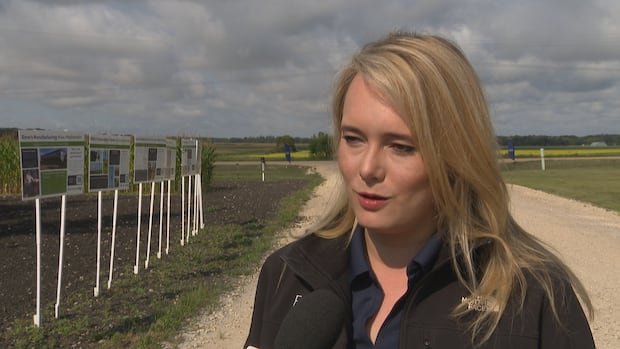

In an effort to deal with the unpredictable weather this season, farmers in Manitoba convened in Grosse Isle to explore the potential of new technologies in safeguarding their harvests and adapting to extreme climatic conditions. Jacqueline Keena, CEO of the Manitoba-based non-profit Enterprise Machine Intelligence and Learning Initiative (EMILI), highlighted the escalating variability and severity of weather patterns this year.
Agronomy Day was hosted by EMILI at their Innovation Farms Grosse Isle location on Rutherford Farms, bringing together a diverse group of industry experts, entrepreneurs, farmers, and agronomists to delve into the realm of digital agricultural tools. The event, situated northwest of Winnipeg, aimed to showcase how these technologies can be effectively integrated into real farm settings using data-driven insights and feedback.
The focus of this year’s event revolved around the theme “weathering change,” with a specific emphasis on the implications of the unusually wet weather on crop health and future yields. Keena shared that their farming strategies had to swiftly adapt during June’s heavy rainstorms, which inundated Rutherford Farms with approximately 25.5 centimeters of rain in a single evening, leading to extensive field damage.
One of the key highlights of the event was the discussion surrounding Crop Intelligence, a data-driven agronomic tool that operates akin to a weather station, capturing vital information on precipitation, temperature, and environmental conditions. Leanne Koroscil, the Innovation Farms manager at EMILI, elaborated on how the tool interacts with a soil probe to monitor soil moisture levels throughout the season, enabling farmers to make informed decisions early on.
Charles Fossay, a seasoned farmer near Starbuck and director at Keystone Agricultural Producers, emphasized the utility of tools like soil probes, particularly for irrigation farmers. Despite the potential data overload, Fossay recognized the value of such innovations in providing crucial insights into soil moisture levels, root growth, and nutrient utilization, all of which significantly impact crop yields.
Reflecting on EMILI’s evolution over the past decade, Keena noted a substantial shift in the industry’s perception of artificial intelligence and new technologies. Initially tasked with advocating for the integration of AI in agriculture, EMILI now focuses on demonstrating the tangible benefits of these technologies to farmers like Fossay, guiding them through the adoption process by showcasing real-world applications before making investment decisions.