

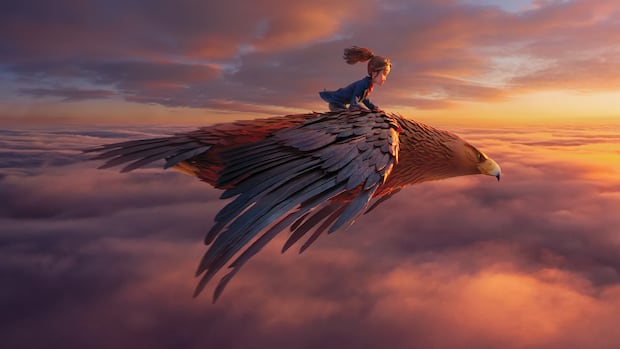

Certain films have the power to ignite a shift in your mindset.
These films compel you to leave your bus stop and walk home for 10 kilometers, lost in thought. They lead you to step through your front door, take a seat, and create something expressive — even if it’s rudimentary, unfinished, or somewhat flawed.
They urge you to produce anything; it only needs to exist, as you’re suddenly reminded of the remarkable reality that each person is capable of a genuine form of magic: the creation of art.
In this instance, that burst of inspiration is found in Wildwood, the latest dark-fantasy, stop-motion spectacle from the renowned studio Laika. This animated giant has been in the making for 16 years, coming from the creators of Coraline, ParaNorman, Tim Burton’s Corpse Bride, and Kubo and the Two Strings. Given this impressive lineage, it’s not surprising that attention is drawn to what the studio, along with this reviewer, is proclaiming to be its clear masterpiece.
This expectation is understandable, considering the extensive effort and time invested in Wildwood. Based on the 2011 book of the same name, Laika’s film is a labor of love from CEO Travis Knight, who has overseen its production nearly throughout his tenure at the company. The outcome is reportedly the longest, most expensive, and among the most ambitious projects ever undertaken in animation. This is particularly impressive considering the medium is known for its painstakingly slow creation process.
However, this meticulous process has culminated in a breathtaking display of human creativity, radiating such raw beauty that calling it one of the finest animated films ever made feels like an understatement.
Wildwood is brimming with subtle showcases of intricate craftsmanship that make you pause in awe every time a character effortlessly leaps from a rock — a sequence likely taking weeks to animate — or when a vast swarm of dark, clay-crafted crows soars through the air in a mesmerizing display that resembles a natural occurrence seemingly impossible to achieve by hand.
Additionally, throughout the film, each character appears to be genuinely breathing. Their chests visibly rise and fall, thanks to a unique internal breathing mechanism developed and maintained by Laika for the entire duration of the film, adding another layer of realism.
The apparent dedication required to create these seemingly unachievable scenes serves as a not-so-subtle critique of generative AI that resonates throughout both the animation and storyline.
Even as its narrative — involving a young girl named Prue (voiced by Peyton Elizabeth Lee) and her hesitant companion Curtis (the charming and delightful Jacob Tremblay) on a quest through an enchanting forest to rescue her abducted baby brother from magical realms on the verge of conflict — may not seem particularly fresh.
-
REVIEW
Nathan Fielder’s You Can See Everything gazes into the abyss of Elizabeth Holmes
-
REVIEW
Tom Cruise is fantastic in Digger. You might hate it
To hear some critics tell it, having seen one Spiderwick Chronicles — or Labyrinth, Bridge to Terabithia, Where the Wild Things Are and so forth — means you’ve seen them all.
This specific critique — that Wildwood‘s overly familiar plot is its weakest link — is already a noted observation. Meanwhile, its technical prowess has been widely praised: a reported budget of $100 million USD, over 200 distinct puppets, and more than 1,000 artisans contributing, culminating in one particularly breathtaking battle scene.
This climactic sequence showcases 3,000 characters over a span of 12 minutes — and the sets, if connected end to end, would exceed the height of a small building. Laika reports that it necessitated one worker solely dedicated to tracking the evolving facial scars of the main character — just for that particular sequence.
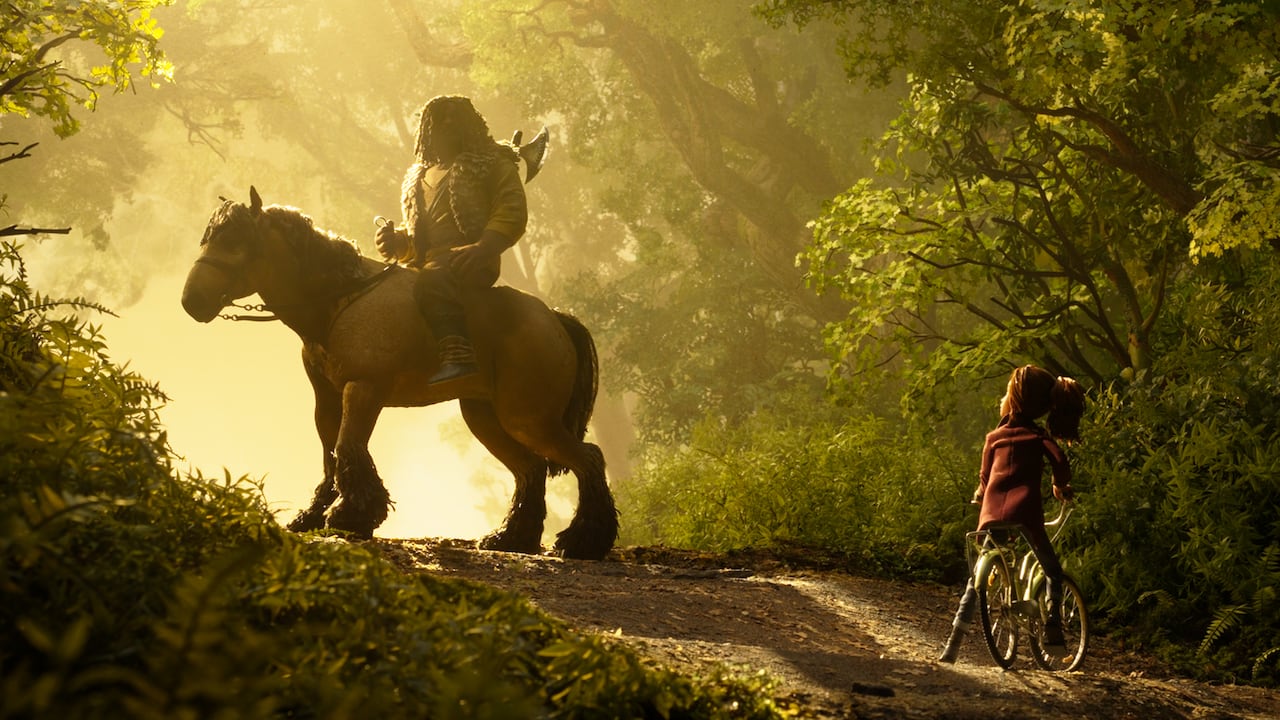
Brendan the Bandit King, voiced by Mahershala Ali, appears in a scene with Prue. (Laika)
However, according to some early viewers, Knight allocated those resources primarily to achieve the — undeniably impressive — visuals, effectively pouring the budget into ingeniously crafted internal skeletons, functional under-skin bicep muscles, and fully articulated horses. Then, he reportedly used the remaining funds to produce a script that resembles Narnia 2: This Time It’s Personal.
This is peculiar, given the final outcome. While it is true that Wildwood could have subverted expectations, its remarkable execution of the magical realm/children-in-danger narrative comes together exceptionally well. For its intended audience of children, the chance that they’ve already grown weary of such clichés is lower. More likely, Wildwood will become their cherished memory of such stories.
What stands out as the most original element of its storyline — at least within the context of contemporary American animated films — is an astonishing degree of violence for a children’s feature: firearms, swords, deaths, menacing snarls, blood-curdling threats, arrows piercing chests, and blood seeping from mouths.
Coupled with the chilling performances of Carey Mulligan as Dowager Governess Alexandra and particularly Tom Waits as the genuinely frightening coyote warrior Maksim, it is genuinely surprising how far Knight ventures into the depths of fear and emotion intertwined with childhood.
Especially now, it’s quite unexpected that anyone would invest so heavily in exploring the unsettling and frightening aspects of childhood. More often, when modern children’s media incorporates genuine danger, it is presented within the confines of taxpayer-supported entities: reminiscent of Canada’s past, uniquely intriguing children’s shows like Cybersix, The Odyssey, or simply deeply disturbing public service announcements.
-
REVIEW
Toy Story 5 is the best sequel yet. It’s still barely about kids
-
REVIEW
Elio is Pixar’s best, most beautifully brilliant movie in a decade. Too bad it will probably bomb
In modern American narratives, there is an expectation to eliminate the harsh realities, similar to what Apple TV did with the overly sanitized reboot of Time Bandits. Or, as some fans anticipate will be the case with the almost identically frightening adaptation of Brothers Lionheart, the sensible business choice is to market dark fantasy to adults as gritty drama.
This makes Wildwood‘s presence a remarkable anomaly; it arises from a unique set of circumstances that may not be replicated. Laika receives partial funding from Knight’s father, Phil Knight, a co-founder of Nike, and the studio’s sole profitable feature remains Coraline. Beyond the laborious, time-consuming, and expensive production process, every choice made in Wildwood — from its unconventional animation style to its specific genre and inherent violence — seems crafted to perpetuate that money-losing trend.
This message is subtly yet defiantly presented in the background: “Enjoy handmade art before it’s gone forever,” is scrawled on a street sign. It serves as a clarion call for itself; a hidden Easter egg advocating for a format that cannot realistically endure. Moreover, it is clearly a critique of generative AI.
Nevertheless, Wildwood also appears intended to accomplish what our current profit-driven system rewards the least: crafting something thought-provoking, unforgettable, and steering clear of the lowest common denominator. It seems designed to honor human achievement. And it appears focused on celebrating humanity; reflecting our true value and capabilities.
Which, ultimately, is to perform magic.